


A Return, Not a Trend
Rowing has been the quietly serious workout for about thirty years. Calls itself a full-body movement. Doesn’t shout about it. Then, somewhere around 2023, it started showing up in the fitness conversation again – on TikTok, in physio recommendations, in the equipment lists of people who’d previously been all-in on running.
What pulled it back? Probably a few things at once. Injuries from too much running pushed people toward low-impact cardio. The aesthetic of a wooden water rower turns out to look great on Instagram. And the simple truth – that rowing genuinely works most of the body in one motion – became harder to ignore as the cult of “functional movement” kept growing.
What most of the coverage skips is the single decision that shapes the entire experience: what kind of resistance the rower uses. Get this right and the comeback story checks out. Get it wrong and you’ve bought a piece of furniture that lives next to the radiator for three years.
The Three Resistance Types – Honestly Compared
There are essentially three resistance systems in the modern rowing market: air, water, and magnetic. (Hydraulic exists too – on the cheaper end – but it’s not really comparable for serious cardio.) Each one feels different. Each one suits a different buyer. And the marketing rarely tells you the truth about which one you actually want.
Air Resistance: The Cardio Engine
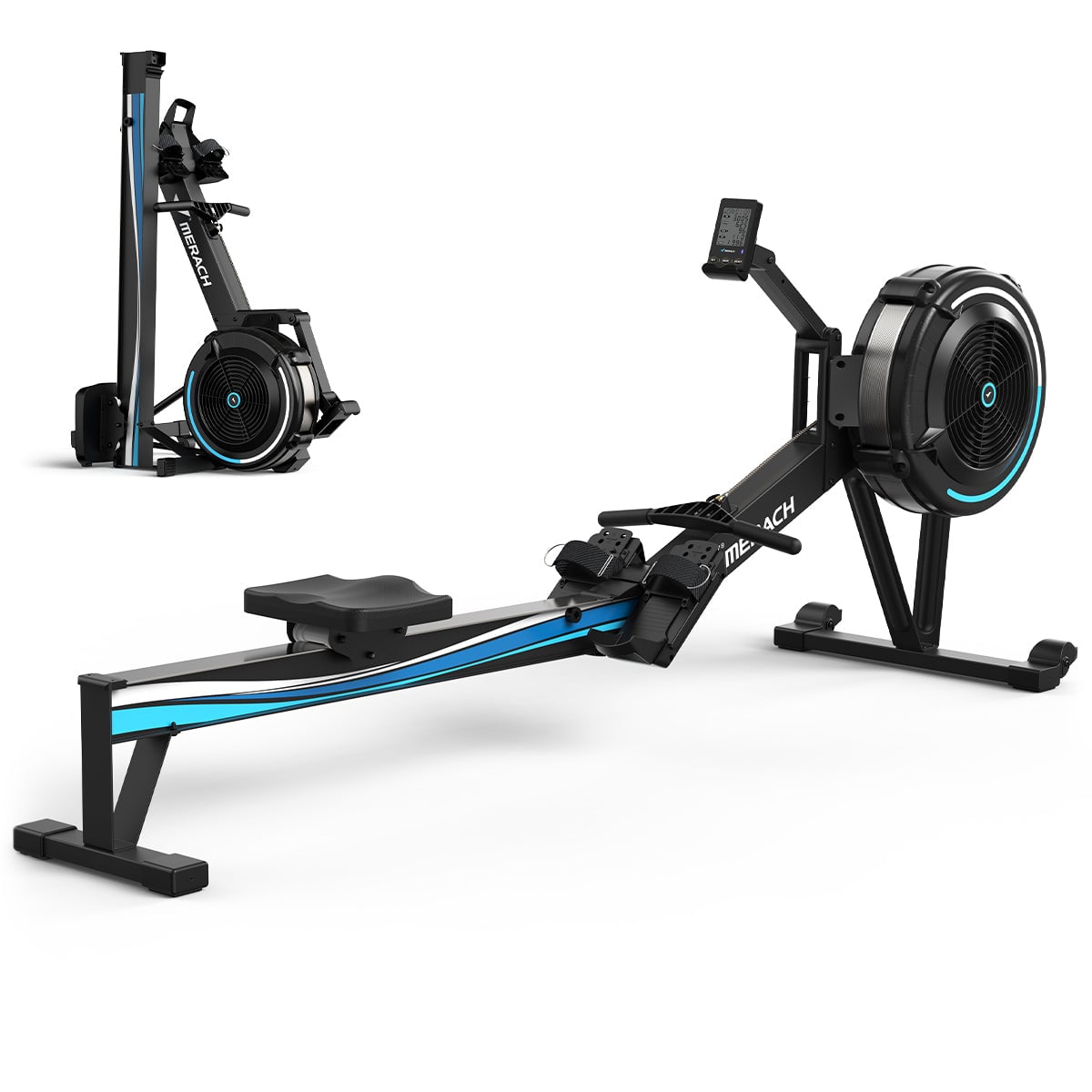
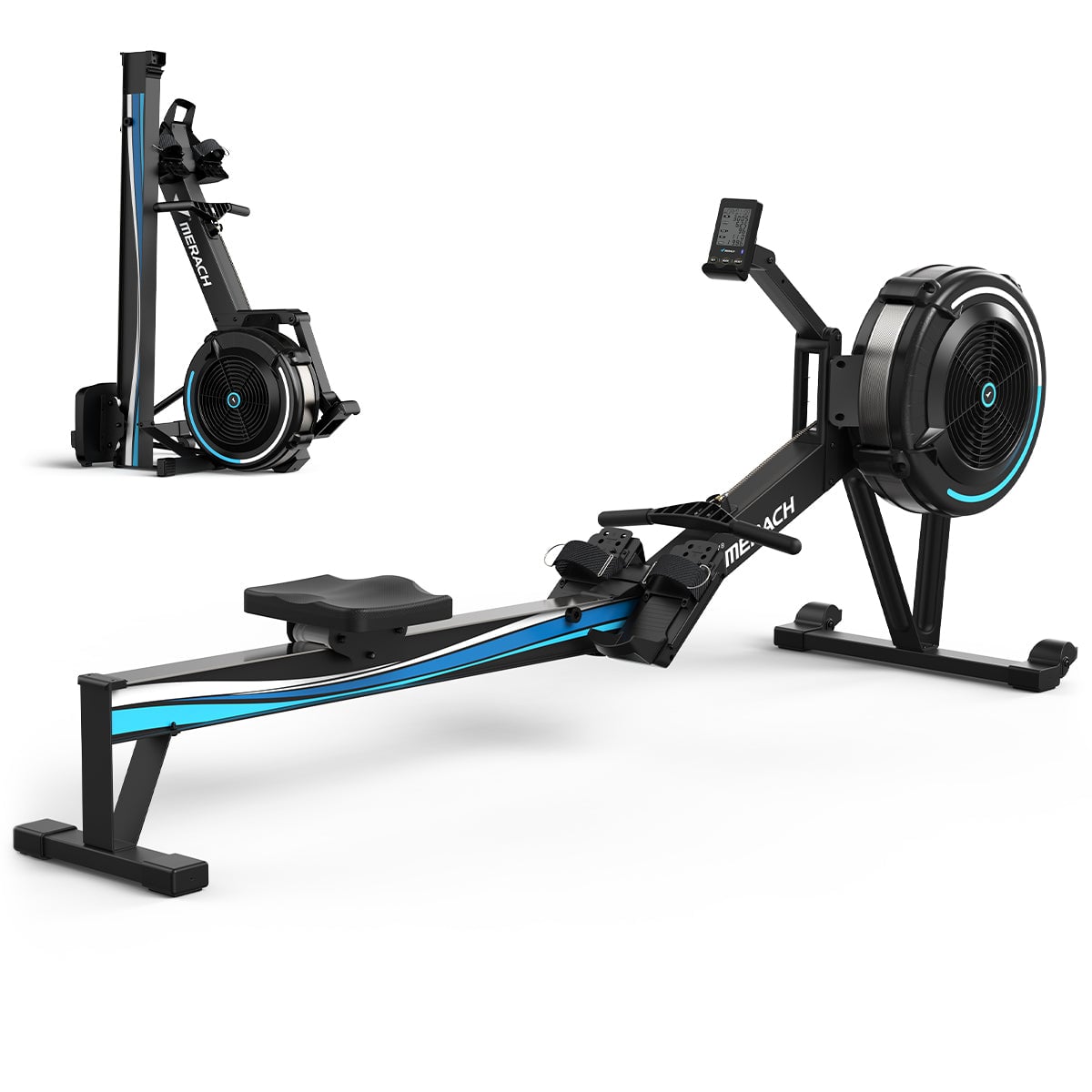
Air rowers – like the Merach R50 – use a flywheel and fan. The harder you pull, the more resistance you generate. That’s a brilliant property if you want training that scales with effort. A sprint interval feels brutal. A steady-state row feels controlled. The R50 adds 10 calibrated levels on top of the natural air response, which gives you finer control without compromising the feel.
The drawback – and there’s always a drawback – is volume. Air rowers are louder. The fan makes a real noise. If you’re in a flat with thin walls and a 6am workout window, you’ll think about that noise more than you’d expect.
Water Resistance: The Feel
Water rowers – Merach’s R28R1 is a good example – use a paddle inside a tank of water. The sound is the sound of actual water moving. Some users describe it as meditative. The resistance behaves a lot like air (harder pull, more resistance) but with a slightly heavier, more anchored feel that mimics a real boat in water.
Cost is generally higher. Maintenance is a real consideration – you’ll add a purification tablet every few months. And the unit is heavier when assembled, which matters if you’re carrying it up to a third-floor flat.

Magnetic Resistance: The Quiet Workhorse
Magnetic rowers – like the Merach Q1S – use magnets to create resistance against the flywheel. The most important property: they’re nearly silent. If you’ve ever been woken up by a flatmate’s rowing session, you understand why this matters.
The Q1S adds a dual slide rail, which improves the glide and reduces the wobble you sometimes get on cheaper magnetic units. The resistance is fixed-level rather than effort-scaled, which suits steady cardio better than sprint training. For most home users, that’s actually fine – the people who need true effort-scaling tend to know it and go straight to air.
Who Should Buy What
Air resistance is the right pick for the serious cardio buyer. If you’re training for any race – rowing, running, triathlon – or you want intervals to actually punish you, the R50 will do that. Just make sure you can live with the fan noise.
Water resistance is the right pick for the buyer who cares about the experience as much as the workout. The sound, the feel, the look of the wood frame in a living room – all of it matters to a certain kind of user, and that user is happy to pay more for it. The R28R1 sits in this category.

Magnetic resistance is the right pick for the small-flat, quiet-hours, regular-cardio buyer. You won’t get the punishing intervals. You will get a workout that fits into a normal life without compromising it. The Q1S fits this profile cleanly.
The Comeback Story, Honestly
Why does rowing earn its return? Because it’s one of the few cardio modalities that genuinely uses most of the body – legs, back, arms, core – in a single coordinated motion. It’s low-impact, which matters more as you age. And the modern rower has finally fit into a small flat without compromising either the feel or the look.
The honest caveat: a rower will only earn its space if you actually use it. The most expensive piece of fitness equipment is the one you don’t use. Choosing the right resistance type – the one that fits your training and your home – is the difference between a rower that gets used 200 times a year and one that becomes a coat rack by month four.
