


An Appliance Most People Buy Twice
Here’s a pattern that shows up across home appliance categories: people buy the cheaper version first, regret it, and then buy the more expensive version eighteen months later. Vacuum cleaners. Coffee machines. And – probably more than either of those – steam stations.
The £100-£200 steam stations work. They make steam. They press shirts. But after the first six months, the limescale starts winning, the pressure starts dropping, and the unit that felt revolutionary at first starts feeling like an upgraded steam iron rather than the household game-changer the marketing suggested. The path from “I love my new steam station” to “I’m shopping for a new one” runs through almost every owner of the cheaper end of this category.

What You Actually Pay For at the £600 Tier
The premium end of the steam station market – the £400 to £800 range where Laurastar, Philips PerfectCare Elite Plus, and a handful of others compete – is doing more than just adding a higher steam pressure number to the marketing copy. The components are different. The design priorities are different. And the failure modes are very different.
Boiler descales gradually until performance drops. Steam pressure inconsistent after 6-12 months. Replace at 18-24 months on average.
Engineered descaling, sealed boilers, professional-grade pressure. 8-12 year ownership window for properly-maintained units.
The Component That Actually Matters
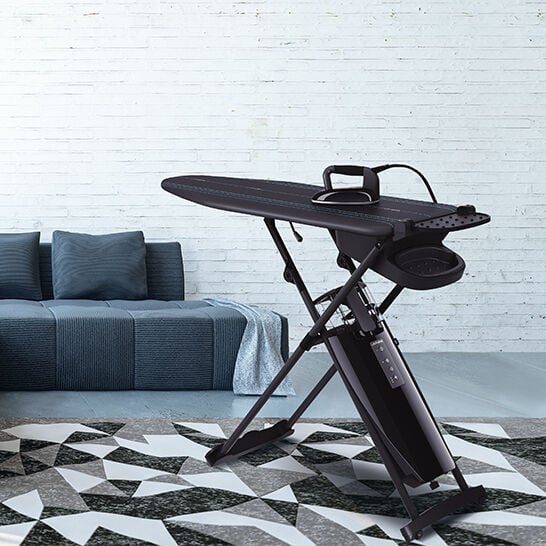
If you want one technical lens through which to evaluate any steam station, look at the boiler. Cheap units use a fast-heat aluminium element that produces steam by mass evaporation. Premium units use professional-grade boilers – often stainless steel – that produce dry steam under pressure. The difference shows up in two ways: how the steam interacts with the fabric, and how long the unit lasts before scale destroys it.
You don’t pay £600 for a faster iron. You pay £600 for a unit that’s still ironing properly in 2034.
The Cost-Per-Year Math That Changes the Decision
It’s tempting to compare a £150 steam station to a £600 one and conclude that the £150 unit is four times better value. The math doesn’t actually work that way once you account for replacement cycles. Run the numbers across a realistic ten-year ownership window and the calculus inverts.
10-Year Cost Comparison (Approximate)
£150 unit, replaced every 24 months: 5 replacements × £150 = £750. Plus rising frustration about steam pressure.
£600 premium unit, maintained: 1 unit × £600 = £600. Plus consistent performance throughout.
Net savings on the £600 unit: £150 + the cumulative time and friction of replacing four units.
That math is the actual case for the premium tier. Not “you’ll have a fancier steam station.” But “you’ll spend less money and less mental energy across the lifetime of the appliance.” For households that iron regularly – more than once a fortnight – the math works comfortably in favour of the premium unit. For households that iron once a quarter, the £150 unit is probably fine, because you won’t outlast its useful life anyway.
Where the Premium Tier Doesn’t Pay Off
It’s worth saying the honest part. A £600 steam station is overkill for a small flat where most clothes go to the dry cleaner anyway. It’s overkill if you wear t-shirts and jeans 90% of the time. It’s overkill if you live somewhere with naturally soft water – the descaling advantage is much smaller when there’s less scale to descale.
The pattern is real: appliance pricing is largely about ownership duration, not feature count. The buyer who treats a steam station as a five-year purchase pays more upfront and less in aggregate. The buyer who treats it as a two-year purchase ends up doing the opposite. Decide which buyer you actually are – and shop accordingly.
