


The Three Mistakes Almost Everyone Makes
Buying home cardio equipment is one of those decisions people make twice. The first time, they get it wrong. The second time, they’ve learned what actually matters. After eighteen months of testing units in normal homes – not gym studios, not unboxing videos, actual flats with bills and ceiling heights and partners – three patterns kept showing up. They’re worth saying out loud.
Mistake one: prioritising features over fit. Mistake two: ignoring noise. Mistake three: assuming the brand name guarantees the experience. Most of the disappointment in the category comes from one of those three. Sometimes all three at once.

Lesson One: The Spec Sheet Is Not the Workout
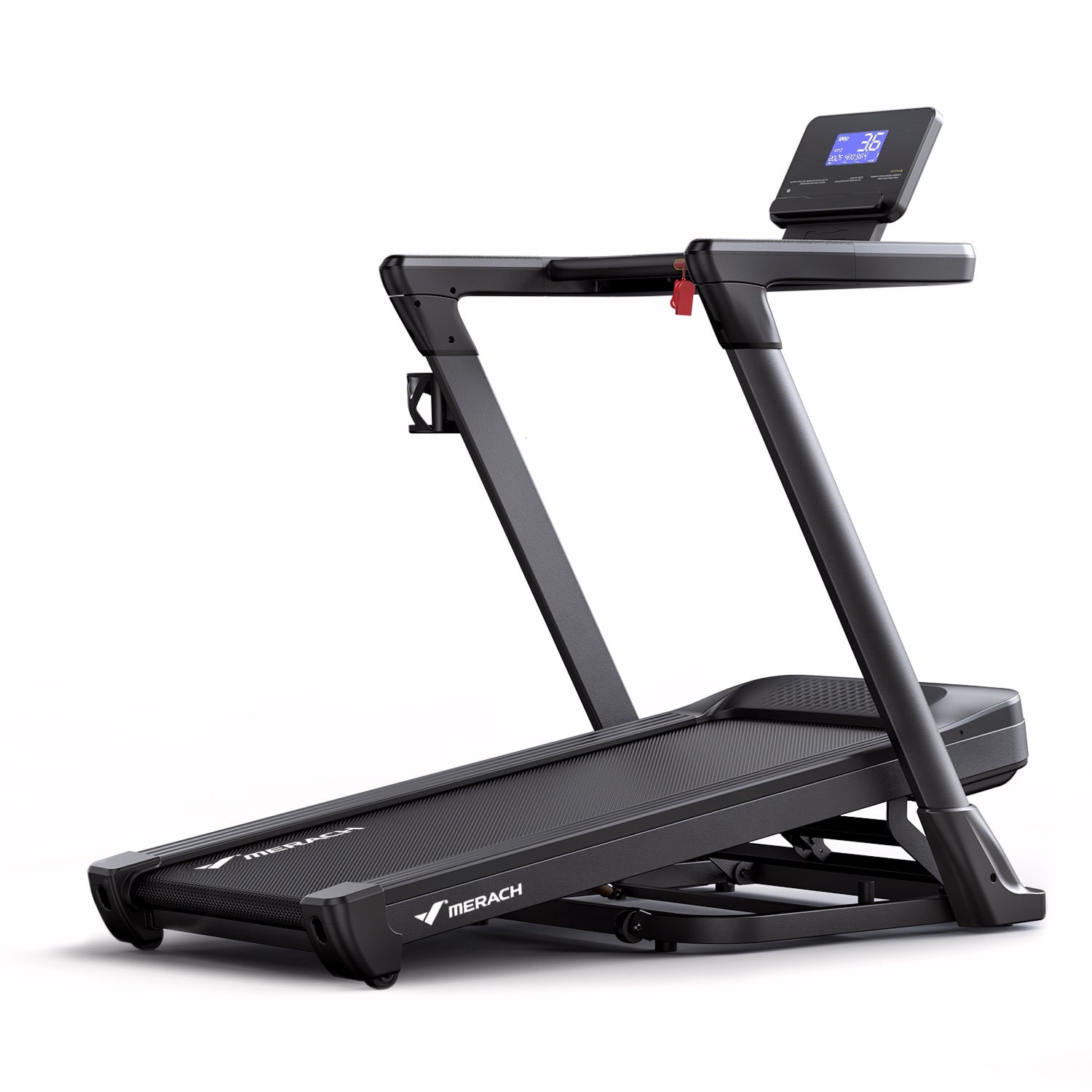
Treadmills are the clearest case. A 22% incline reads great on a spec sheet. In a small flat with a 2.4m ceiling, you’ll never use anything above 12%. The high-incline number isn’t a feature – it’s a marketing artefact.
What actually matters: the belt length, the deck cushioning, and whether the unit folds in a way that fits the space when it’s not being used. The Merach W50 sits at a sensible 12% max incline and was clearly designed by someone who’d thought about the small-flat user. The T31B1 goes higher – 18% – which suits hill-training buyers, but they’re a niche, and they should know they’re the exception.
The lesson generalises: read the spec sheet for the bottom 20%, not the top. The bottom of the spec is where the unit lives 90% of the time.
Lesson Two: Noise Is the Quiet Killer
Almost every disappointed home-cardio buyer says the same thing eventually: “I stopped using it because it was too loud.” It’s the most under-discussed factor in the entire category, and it kills more home routines than any other variable.

What makes a unit loud? A few things: motor type (DC motors are quieter than AC), belt cushioning (rubber-deck units transmit less impact), and frame rigidity (a wobbly frame rattles). Test in a quiet room before you commit. If you can’t test it in person, look for reviews that specifically mention decibel readings rather than vague “it’s quiet” comments.
Magnetic bikes and rowers solve this almost entirely. Air rowers and motorised treadmills don’t. Self-powered treadmills sit in the middle. The honest framing: choose the resistance/drive type with noise as a primary input, not an afterthought.
Lesson Three: The Frame Tells You More Than the Brand
This one took us the longest to learn. Brand reputation is a noisy signal. A famous name on a cheap frame is still a cheap frame. A less-famous name on a well-engineered frame outlasts it.
How do you read the frame? Look at the user weight capacity. The Merach S29B1 bike, for instance, takes 350lbs (158kg) max. That’s not because the maker expects every user to weigh that much – it’s a proxy for how the frame is engineered. A 350lb capacity bike used by a 75kg user is going to feel rock-solid because it’s been built for triple the load. A 100kg-capacity bike used by the same 75kg user will start to feel flexible after a few months. That difference, over a five-year ownership window, is enormous.

The same logic applies to rowers. A rower rated for 150kg with a steel-reinforced rail will hold up better – across years of daily use – than a 100kg unit with a thinner build. You probably won’t notice in week one. You’ll definitely notice in year three.
What’s Worth the Money
Across the eighteen months, a small handful of units genuinely earned their place. The pattern was consistent: they all solved the right problem for their user, didn’t over-engineer for problems that didn’t exist, and didn’t cut corners on the parts that matter.
If you want one cardio unit and you live in a small flat, a folding treadmill in the 12-15% incline range is the most flexible choice. If you want low-impact, a magnetic rower is the best balance of usability, noise, and price. If you want something you’ll genuinely train on, an air rower or a high-capacity bike will outperform almost everything else in the budget range.
That’s the honest summary. None of it is exciting. Most of it doesn’t make for a great unboxing video. But it’s the version of the advice that, after eighteen months, holds up.
