



The Building Is Doing More Work Than You Think
Every observatory in the world is selling the same thing: a high-up view of a famous city. What separates the memorable ones from the forgettable ones isn’t the altitude. It’s the choreography. The architecture – the elevator, the floor plates, the materials, the proportions – is what turns a height measurement into an experience that lands.
One World Observatory understands this better than almost any of its peers. The view is, of course, the headline. But sit with the building for an hour, and you start noticing how much work the architecture is doing to make the view feel earned rather than just delivered.

The SkyPod: The Most Underrated Part of the Visit
Most visitors don’t talk much about the elevator. They should. The SkyPod is one of the most quietly clever pieces of building engineering in any contemporary observatory anywhere. You step in at street level. The doors close. And then – in 47 seconds – you travel up 102 floors while the walls show you 500 years of New York City history rendered in time-lapse around you.
You don’t ride an elevator. You ride a compressed view of a century.
The trick of the SkyPod isn’t the speed. It’s the disorientation. By the time the doors open at the top, you’ve lost track of which floor you’re actually on. You’ve lost the ground reference. The architecture has erased the normal physical relationship between you and the city below. When the view finally arrives, it doesn’t feel like you climbed up to it. It feels like the city assembled itself in front of you.
See Forever Theater – and the Choice Behind It
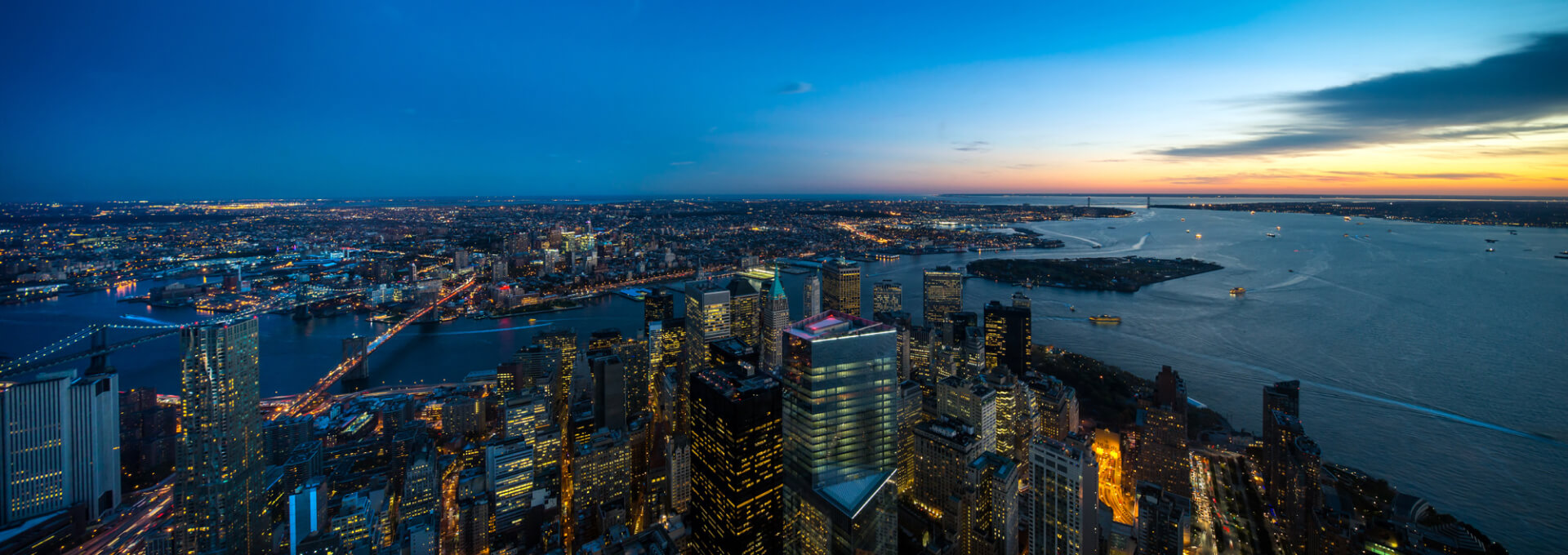
The See Forever Theater is the second piece of architectural choreography most visitors underestimate. Before the windows reveal themselves, you walk through a short immersive sequence – cityscape, sky, weather, time – that primes your eyes for what’s coming. Then the screen pulls back. The actual New York City sits in front of you. And the contrast between the simulated and the real lands with much more force than it would have if you’d just walked up to a window.
The Architectural Choice Worth Naming
Most observatories put you at a window the second you arrive. One World Observatory delays the reveal by about three minutes – through the SkyPod, then the theater. That delay isn’t waste. It’s deliberate. The architecture is teaching your eyes how to look before it lets them see.
The Proportions Nobody Mentions
Here’s a small architectural detail that’s easy to miss. The ceiling heights on the observation floor are deliberately tall. The window walls are floor-to-ceiling. The lighting is dimmer than feels natural at first – because dimmer interiors make the outside view feel brighter and bigger. None of these are accidents. All of them are pulling the visitor’s attention through the glass and into the city.

Compare this to a typical hotel sky bar – bright interior, low ceilings, busy lighting fixtures. The eye gets distracted. The view becomes background. The architecture is fighting against the experience. At One World Observatory, the building is doing the opposite. Every interior choice is engineered to disappear so the view can dominate.
The Honest Architectural Critique
It’s not flawless. The route through the observation deck can feel a bit corporate at moments – the City Pulse Ring system, while clever, sometimes pulls visitors away from the windows rather than enhancing them. The retail integration at the end is, like most modern attraction retail, slightly more aggressive than it needs to be. And the See Forever Theater, brilliant as it is, runs slightly long for some visitors.
None of these break the experience. They’re worth naming because they’re the parts that future iterations could improve. The core architectural choreography – SkyPod, theater, ceiling proportions, lighting choices – is doing the heavy lifting and doing it brilliantly.
Why This Matters
The reason to understand the architecture behind One World Observatory isn’t trivia. It’s the difference between visiting a tall building and experiencing one of the most carefully engineered viewing sequences in modern urban design. When you know what the building is doing, you stop fighting it. You let the SkyPod disorient you. You let the theater prime your eyes. You stand at the window for longer than you would otherwise. And the visit lands harder.
