


The Math Problem at the Heart of CBD
Most people buy CBD by reading the mg number on the bottle. It’s the easiest signal to compare across brands. A 3000mg bottle sounds stronger than a 1500mg bottle. A 6000mg bottle sounds even stronger. And in a strict, lab-test-on-the-product sense, all of that is true. The mg on the bottle is the mg in the bottle.
But what almost no marketing tells you is what happens to that mg after you take it. Because the body doesn’t absorb most of what you give it. The mg on the bottle and the mg that actually reaches your bloodstream are two very different numbers – and the gap between them is where the real CBD conversation should be happening.
What “Bioavailability” Actually Means
Bioavailability is a clinical pharmacology term for the percentage of an administered dose that reaches systemic circulation. It’s been understood for decades in pharmaceutical science. CBD – because of the molecule’s chemistry – is a famously poor bioavailability candidate. Without help, the body absorbs a frustratingly small fraction of what you take.
Two products with identical mg labels can deliver radically different effective doses. The gap is often 4x or more.
The numbers, based on the most-cited bioavailability studies in the literature: oral CBD (gummies, capsules) sits in the 6-19% range. Sublingual CBD (oil held under the tongue for 60+ seconds before swallowing) sits around 13-35%. Inhaled CBD (vape) can reach 31-56%. The differences are huge. The same 25mg dose taken three different ways delivers three meaningfully different effective amounts.
The Three Big Bioavailability Levers
If bioavailability matters, then the choices you make at purchase actually shape how much CBD your body sees. Three levers do most of the work.
Sublingual oil beats swallowed capsule. Hold under tongue for 60–90 seconds before swallowing.
MCT oil and hemp seed oil carriers absorb better than coconut oil or olive oil alone.
Take CBD with a fat-containing meal. Bioavailability roughly doubles with food.
Why SupremeCBD’s Format Matters
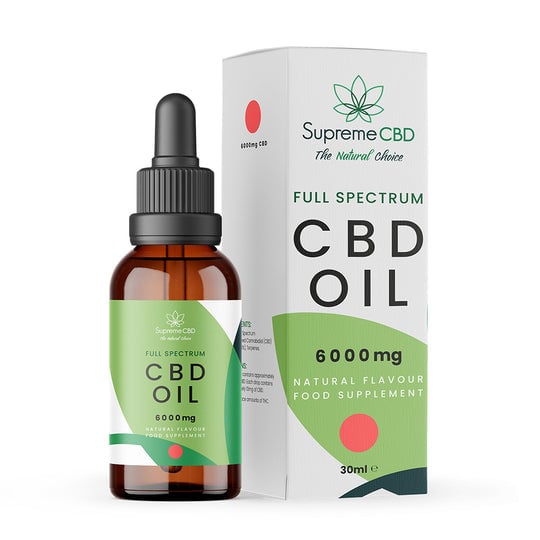
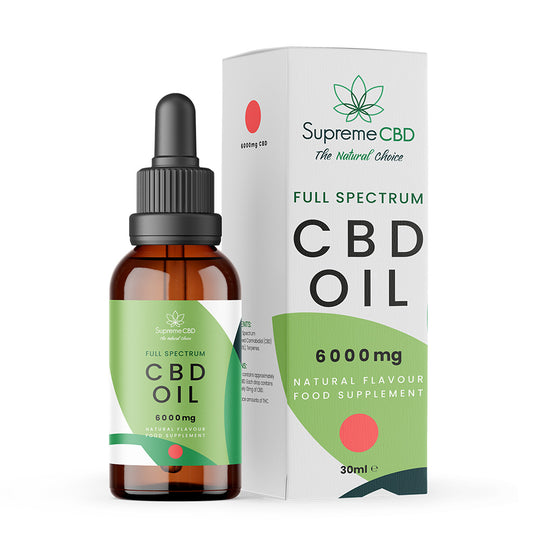
Looking at the SupremeCBD range through the bioavailability lens is more useful than looking at it through the mg lens. The full-spectrum oils, at the 500mg, 1000mg, and 3000mg strengths, are sublingual products – which means the bioavailability ceiling is meaningfully higher than for the gummy and capsule formats. The brand uses MCT carrier oil, which is the right choice. And the dosing structure – 100mg per pipette on the 3000mg variant – is the kind of precision that lets you actually titrate to effect, instead of guessing.

When Capsules Make Sense Anyway
Bioavailability isn’t the only consideration. Capsules – despite the absorption disadvantage – have advantages oils can’t match. Precise, repeatable dosing. Zero taste. Easy to carry. Easy to take in public. For many users, those practical wins outweigh the absorption penalty.
The “best” CBD format is the one you’ll actually use consistently. The 30% bioavailable oil you don’t take regularly is worse than the 12% bioavailable capsule you take every morning without thinking about it.

The Honest Verdict
Buy a CBD product on bioavailability when you’re optimising for effect per pound. Buy a CBD product on format fit when you’re optimising for consistency of use. Most users should think harder about the second than the first.
And ignore raw mg numbers as the primary signal. They’re useful as a sanity check – a 50mg-per-bottle product is genuinely worse than a 3000mg-per-bottle product at any reasonable dose. But within the meaningful potency range, mg alone won’t tell you which product will land best for your body, your routine, and your timeline. Bioavailability and format will.
