



A Different Buyer With Different Reasons
When CBD first entered the UK mainstream around 2018, the buyer was young, curious, and largely experimental. Seven years later the demographic has shifted. The fastest-growing CBD customer in 2026 is over 40, often over 50, and arrives at the product with very specific reasons – sleep that’s stopped reliably restoring, stress that doesn’t switch off in the evening, joint comfort after exercise or long workdays, and a clear preference for products that don’t get them high or interfere with their lives.
Most CBD content still gets written for the original demographic. This article isn’t. If you’re in or near the 40+ group and you’re considering CBD, here’s the version of the advice that actually fits.

Start With the Three Honest Questions
Before you buy anything, answer these three. They’ll narrow the right product faster than any review.
Three Questions, In Order
- What specific outcome are you looking for? Better sleep, lower evening tension, joint comfort? Different products optimise for different goals.
- What format will you actually use consistently? Oil under the tongue every night, or a capsule with breakfast? Be honest about your routine.
- What’s your starting tolerance? If you’ve never taken CBD, start low. Always.
For Sleep: The Evening Routine That Actually Works
If sleep is the primary goal – and for the 40+ demographic, it almost always is – the most consistent pattern from the better evidence we have is this. Take CBD 60-90 minutes before bed. Use a sublingual oil at a starting dose of 15-25mg. Hold under the tongue for at least 60 seconds before swallowing. Pair with a short, low-stimulation routine – lights dimmed, no phone, a book or a tea.
CBD doesn’t make you sleep. It removes some of the chemistry stopping you from falling asleep. That’s a different mechanism – and it works much better when paired with a real routine.
What CBD won’t fix: late caffeine, screens 30 minutes before bed, a heavy late meal, or the bedtime alcohol that quietly destroys deep sleep architecture. CBD added on top of those won’t override them. The combination matters.
For Stress: A Smaller Daily Dose
The pattern that works best for daytime stress isn’t a single big dose. It’s a smaller dose taken consistently, often twice a day, at predictable times. Mornings with breakfast, mid-afternoon before the evening transition. The mg per dose is usually lower – 10-15mg – but the total daily intake adds up to a meaningful amount delivered across the day rather than all at once.

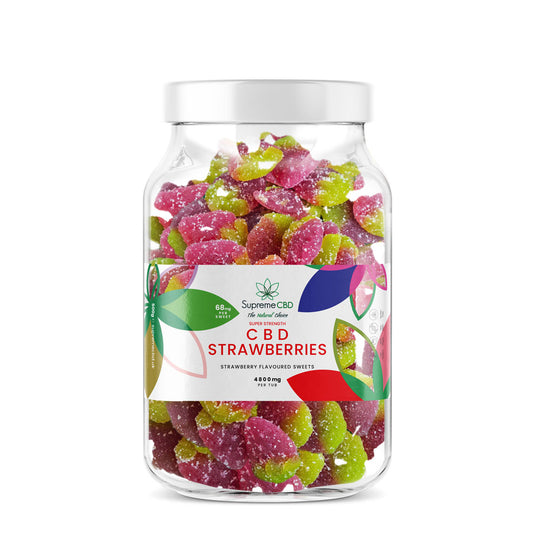
Gummies work well for this pattern, because the dose is fixed and the format suits daytime use. The SupremeCBD Super Strength Gummy Bears at 4800mg per tub deliver about 60mg per gummy – which is too much for a new daytime user. Cut them in half or quarters until you find the dose that works. The mg-per-tub number sounds reassuring, but the dose-per-piece is the number you’ll actually take.
For Joint Comfort: The Timing Question
Joint discomfort – the kind that arrives after a long walk, a gardening day, or just the cumulative wear of a 50-year-old body – responds to CBD in some users and not in others. The honest framing: CBD isn’t an analgesic. It can modulate certain inflammation pathways and may help with the inflammatory component of joint discomfort, but it won’t act like ibuprofen.
Take 20-25mg twice a day, every day, for four weeks. Don’t change anything else. At the end of four weeks, look back and ask: do I feel meaningfully different? If yes – keep going. If no – it probably isn’t working for you, and there’s no reason to keep buying.
What to Tell Your GP
If you’re on regular prescription medication – particularly blood thinners, anticonvulsants, certain antidepressants, or any drug processed by CYP450 liver enzymes – tell your GP you’re taking CBD. It can affect how those drugs metabolise. It’s not usually dangerous, but it’s worth flagging. Your GP will rarely have a problem with you taking it, but the interaction information should be on the record.
The 40+ Summary
Start low. Be consistent. Pair CBD with the rest of a sensible routine, not in place of it. Use sublingual oil at night for sleep, gummies or capsules during the day for ongoing stress or joint comfort. Don’t expect dramatic results in week one. Run a four-week test honestly. And if it doesn’t work for you, accept that, and don’t keep buying.
The 40+ demographic is the fastest-growing CBD buyer for a reason. The product, used properly, does enough useful work for enough people. Used poorly – inconsistent dosing, unrealistic expectations, no routine – it usually does nothing. The difference is the routine, not the brand.
