


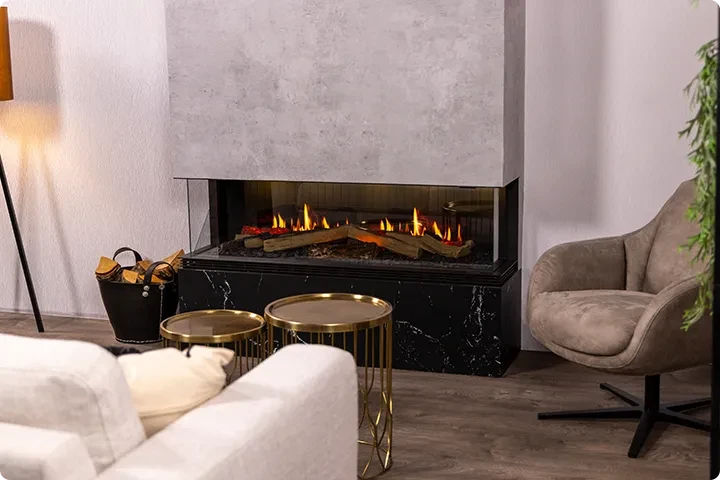
There is a moment – you know it – when a garden party shifts from pleasant to genuinely memorable. The food is gone, the conversation is flowing, and nobody wants to go inside. Nine times out of ten, there is a fire involved. Not a scented candle. Not fairy lights. An actual fire, casting that particular amber glow that keeps people anchored to their chairs well past midnight.
The problem? Most people bolt online, panic-buy the first steel bowl they see, and end up with something that rusts within a season and throws more smoke than warmth. The fire pit becomes an afterthought – dragged out, half-heartedly lit, quietly abandoned by 9 p.m.
This guide exists to prevent that. Choosing the right outdoor fire feature changes the entire character of your space. It does require thinking a bit harder than “which one is cheapest” – but the payoff is real.
Why the Fire Pit Market Got Complicated
Five years ago, “outdoor fire pit” basically meant one thing: a cast iron bowl, some logs, and a weekend of sawdust on your hands. The category has exploded since. Gas fire tables with remote ignition. Bioethanol burners with no chimney required. Sculptural corten steel fireplaces that double as garden art. Electric models for balconies where open flames are simply not permitted. The range is genuinely dizzying, and the marketing around each fuel type glosses over the trade-offs with cheerful consistency.
Gas Fire Pits: The Convenience Argument
Gas – either mains-connected or LPG – is the closest thing to effortless outdoor fire. Push a button. Adjust the flame height. Turn it off when you leave. No ash, no wood pile, no lighter-fluid smell on your jacket. For frequent entertainers who value a tidy terrace, gas is genuinely hard to argue with. The catch is installation – a mains connection requires a registered gas engineer and potentially meaningful groundwork. LPG tanks solve the connection problem but introduce their own logistics: refills, storage, the occasional empty-tank moment when you least want it. Gas fire tables from brands like Planika produce serious heat output. For a proper outdoor kitchen setup, they are the right tool.
Bioethanol: The Modern Default for Urban Spaces
Bioethanol has quietly become the default choice for anyone living in a flat, a rented property, or a home without a chimney – and honestly, for good reason. The fuel is derived from fermented plant material, burns clean with no soot or smoke, and produces only water vapour and CO2 as by-products. No flue. No ventilation requirements. No planning permission headaches.
The fire itself is real – proper amber flames, proper warmth – and the design freedom that comes with chimney-free installation is significant. You can position a bioethanol burner on a terrace, a balcony, or even indoors. Specialist retailers like Biopejs-shop.dk have built their entire proposition around this category, offering over 4,000 products across 50-plus premium European brands – from EcoSmart Fire’s sleek geometric burners to Cocoon Fires’ spherical garden centrepieces.
What bioethanol does not do well: sustained high heat output over a very large area. If you are trying to heat a 60-square-metre terrace on a cold October evening, you may find yourself reaching for the gas heater anyway. For intimate evening gatherings in milder weather, though? It is genuinely excellent.
Wood-Burning Fire Pits: The Atmosphere Champions
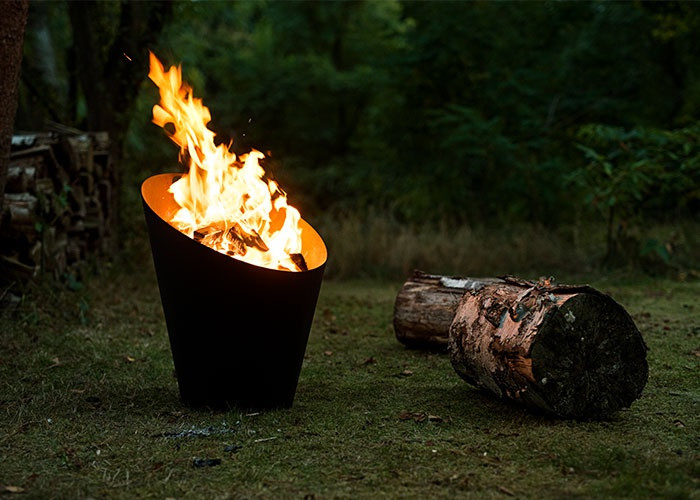
Nothing produces an atmosphere quite like a wood fire. The crackle. The smell of birch or oak smoke on a still evening. Wood-burning fire bowls have a sensory quality that gas and bioethanol simply cannot replicate – and for gardens with real space and privacy, wood is still the ambience gold standard. Just go in with clear eyes: smoke direction is at the mercy of wind, ash disposal is a chore, and urban neighbours may not share your enthusiasm.
Design Styles: What Works in Different Garden Settings
Beyond fuel type, the visual language of your fire feature matters. A rustic corten steel bowl reads very differently from a powder-coated geometric burner, and both look wrong in the wrong setting.
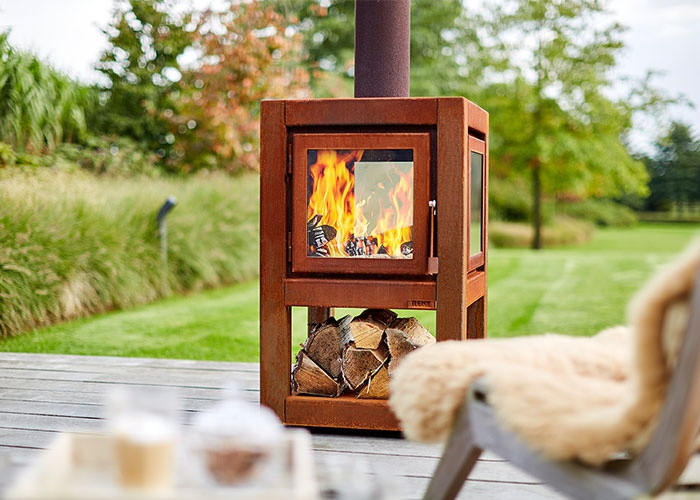
Scandinavian-influenced gardens – clean lines, natural materials, restrained planting – tend to suit architectural fireplaces with simple silhouettes. The RB73 range is a strong example: substantial, beautifully proportioned, built for real outdoor exposure. Morsø’s fire bowls bring similar Nordic sensibility at a more accessible scale. Mediterranean terraces often absorb something more organic – a sculptural corten piece with an oxidised rust patina, for instance. Planika’s Galio models in corten are worth a look there. Contemporary urban gardens increasingly lean toward table-format burners that integrate with outdoor dining furniture – the fire becomes part of the table, not a feature competing for floor space.
- Under 15m² – Tabletop bioethanol burner or compact fire bowl. Prioritise portability.
- 15-40m² – Freestanding gas fire table or mid-size bioethanol fireplace. Consider heat output carefully.
- 40m² and above – Built-in gas feature or large fire pit. A permanent installation makes sense at this scale.
- Balcony/apartment – Bioethanol only. Check your building’s house rules before purchasing.
Permanent vs Portable: A Decision Most People Get Wrong
There is a strong temptation to go permanent – built-in, fixed, statement-making. And in the right garden it is absolutely the right call. But a surprising number of people install a fixed feature and then wish they had stayed flexible. Gardens evolve. Furniture arrangements change. A feature that suited last year’s layout can feel awkward after a terrace reconfigure.
The good news is that the quality gap between portable and built-in has narrowed significantly. Premium freestanding fireplaces from brands like EcoSmart Fire or Cocoon Fires carry the visual weight and material quality of a permanent installation – without the groundworks. You get the look. You keep the flexibility.
Practicalities Worth Getting Right
A few things that rarely appear in the glossy product photography but genuinely affect how much you enjoy your fire feature:
Wind exposure. Open gardens funnel wind in ways that are easy to underestimate. A bioethanol burner without a high-quality wind guard in an exposed position will flicker and die all evening. Gas performs more reliably in wind – a genuine argument in its favour for coastal or hillside properties.
Surface clearance. Every fire feature has minimum clearance requirements from combustible surfaces – decking, pergola timbers, overhead planting. Read these before you buy. Timber decking requires more care than most buyers expect.
Weather covers. Fireplaces left uncovered through winter degrade noticeably faster – even materials marketed as “fully weatherproof.” A fitted cover extends the life of your investment. Not glamorous, but true.
See it burning before you buy. Scale and flame quality are genuinely difficult to assess from product images. Biopejs-shop.dk operates physical showrooms in Aalborg, Copenhagen, and London where you can see working models in person. They also offer video consultations with in-house specialists if the trip is not practical – either way, that expert conversation is worth having before you commit.
The difference between a fire pit you light twice and one you use every weekend comes down to one thing: whether it fits your actual life, not just your aspirational Pinterest board.
The Honest Verdict
Outdoor fire features genuinely transform how you use your garden. A well-chosen fire pit extends your outdoor season by weeks, creates the pull that keeps a gathering alive, and adds a visual dimension that nothing else quite replicates. The people who dismiss them as gimmicks are, almost without exception, people who only ever experienced bad ones.
The one honest flaw in the category: the upfront cost of a quality piece is real. Budget options disappoint. The premium brands – Morsø, EcoSmart, Cocoon, Planika, Dimplex – hold their quality and finish across seasons. That gap between what you want to spend and what actually delivers is the most common source of regret here, and worth confronting early.
Specialists with 12 years of category knowledge – and a team available to talk through your specific terrace and use case – are worth leaning on before you spend. The fire is worth it. Take the time to choose the right one.
