


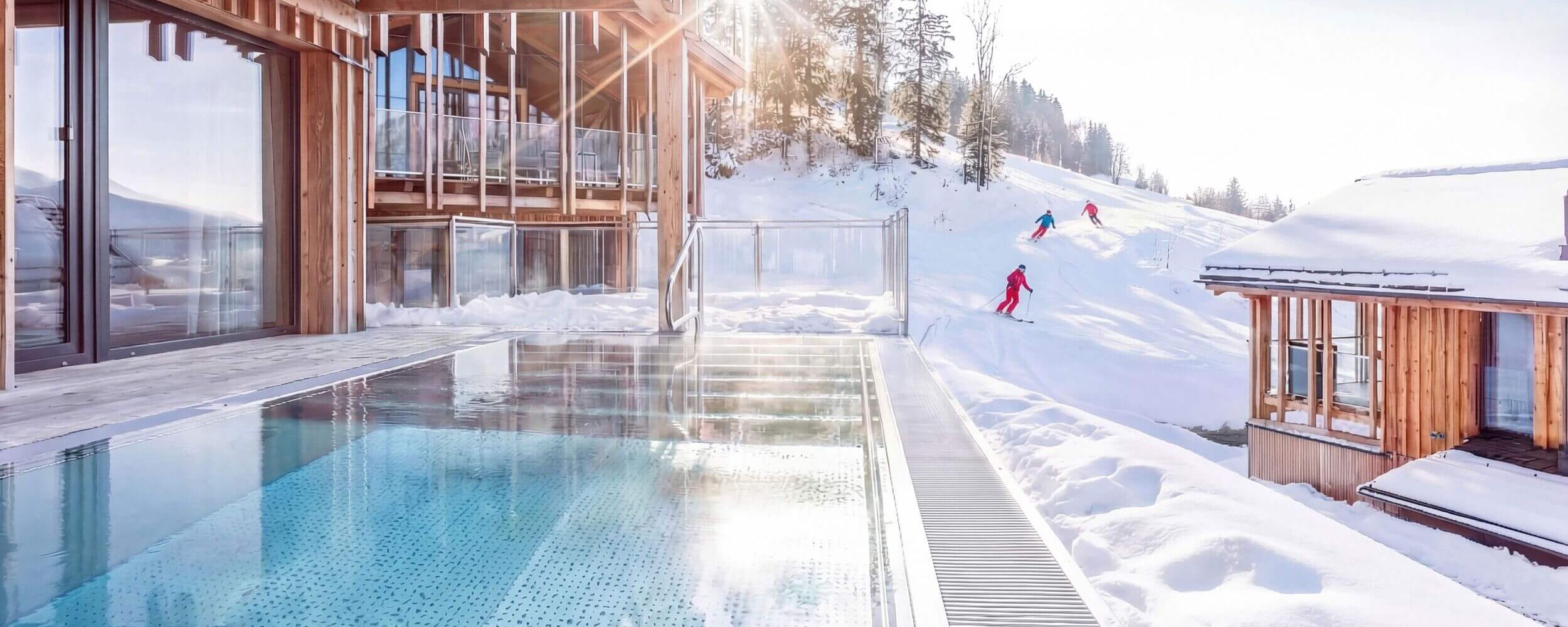
Booking an Austrian ski holiday should feel exciting. It rarely does. You open five browser tabs, cross-reference chalet listings against lift maps, try to figure out whether that “slope-side” description is marketing spin or literal truth, and somewhere around tab number eight you give up and pick something mediocre. Sound familiar?
Austria is one of the great ski destinations on the planet – Tirol, Salzburger Land, Steiermark, Carinthia, and Upper Austria each offering their own mountain personality and lift infrastructure. But that geographic spread is also what makes planning so fragmented. Properties that suit a solo snowboarder hunting steep terrain are completely wrong for a family who need a ground-floor apartment, a second bathroom, and a sauna to collapse into after four hours on beginner runs. The problem has never been a shortage of options. It has been finding the right one without spending your entire pre-trip weekend researching competing platforms with different listing formats.
The Fragmentation Problem Nobody Talks About
Most people planning a ski holiday in Austria end up stitching together information from half a dozen sources. One website for chalet rentals, another for hotel comparisons, a third for ski-in/ski-out specifics, a local tourism board site last updated two seasons ago. It is fragmented by design – dozens of regional operators marketing their slice of the Alps with no incentive to help you compare across them.
What you actually need is someone who has already done the curation work. Alps Resorts operates across all five major Austrian Alpine regions and covers more than 45 properties through a single booking platform. Holiday houses, apartments, hotels, glamping. Not a directory – a curated portfolio where each listing is categorized by the activity it genuinely suits, which makes your matching process dramatically faster than the alternative.
What “Ski Style” Actually Means for Accommodation
Here is a question worth sitting with before you even start looking at photos: what kind of skier are you traveling with?
A group of experienced riders who want first tracks every morning has entirely different requirements than a multi-generational family where grandparents ski two easy runs before retreating to a warm terrace with a coffee. I used to think ski-in/ski-out access was one of those nice-to-have details that only hardcore skiers genuinely needed – then I spent a morning in rented ski boots doing a fifteen-minute road walk to the gondola and completely reversed that position. For your group of committed skiers, that access is non-negotiable. The ten-minute boot-up walk that sounds fine on paper becomes genuinely annoying by day three. For a multi-generational family where proximity to the slopes matters less than space and comfort, that same walk might be perfectly acceptable – because what you actually need is room to dry sixteen pairs of gloves without an argument.
The Alps Resorts approach addresses this directly. Properties are categorized around specific pursuits – ski-in/ski-out access, wellness facilities, hiking trails, cycling routes, golf. That last category might seem odd for a ski article, but Austrian resorts operate year-round, and if you are the type who books return trips to the same property in different seasons, knowing the summer activity profile matters too. The activity-first categorization means you are not reading through twenty listings to discover which three actually have slope-side access. You filter by what you need, then decide.
Group Size: The Variable Everyone Underestimates
Have you ever tried to split eight adults across hotel rooms and then realized the social dimension of the whole trip evaporated? I made exactly that mistake on a group ski trip – booked two hotel rooms thinking it would be simpler, and by day two everyone was eating dinner separately and going to bed at different times. A holiday house changes that completely. The communal living space – one kitchen, one sitting room, one long dinner table – is where the trip actually happens.
Holiday houses solve the group-size problem, but they are notoriously hard to compare across different websites because photography quality, description standards, and capacity labeling all vary wildly. A platform with consistent listing standards removes that friction. You can genuinely compare a six-person holiday house in Schladming against an eight-person property in Westendorf on the same terms – same listing format, same amenity labeling, same visual quality bar. And if your group includes a dog, you can filter for explicitly dog-friendly properties rather than hunting through footnotes for a buried “small pets considered on request” clause.
Premium Amenities That Should Not Cost Extra
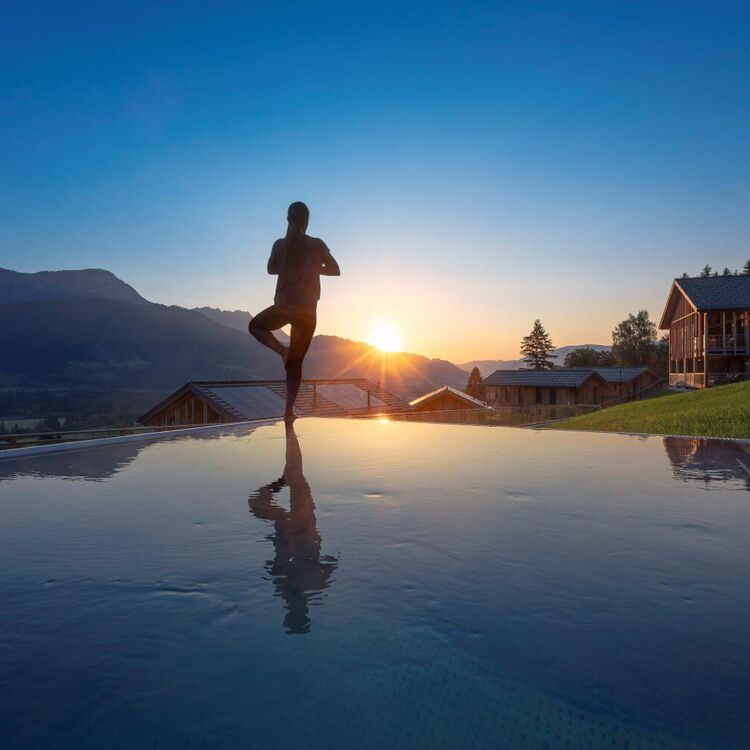
Ever divided a private pool cost across eight people and realized it was cheaper than you expected? Private pools and saunas have historically been the amenities that push ski accommodation from affordable to aspirational. They appear in the listing, inflate the nightly rate, and most budget-conscious groups decide they can manage without. The interesting thing about how Alps Resorts positions these features is that they are treated as standard property attributes rather than costly upgrades presented with theatrical emphasis.
A private pool at a Schladming property with mountain views is a genuinely different experience from a hotel spa where you share the hot tub with twelve strangers at 9am. For your group that will actually use the pool – families with teenagers, couples who ski hard and recover harder – this changes the calculus of what constitutes good value. The per-night cost of a property with a private pool divided across eight people can land at a number that surprises you.
On the dining side, Alps Resorts operates the ALPS KITCHEN restaurant brand on-site at select properties. For ski groups, this matters most in one specific scenario: you have been out since 9am, you are ravenous by 6pm, and the nearest village restaurant has a ninety-minute wait for a table. Having kitchen dining built into your accommodation removes that particular apres-ski headache without requiring you to plan around it.
Five Regions, One Platform: Which One Suits You?
So which region actually fits your group? Tirol draws the biggest crowds for understandable reasons – the lift infrastructure is extraordinary and the village atmosphere around places like Westendorf or Kirchberg delivers something genuinely atmospheric. Schladming in Steiermark has a loyal following among those who have discovered it: less crowded, excellent terrain, and a town center that functions as a real village rather than a purpose-built resort. Bad Kleinkirchheim in Carinthia suits families particularly well. The regions differ in character, and your preference depends entirely on the kind of skier you are and what you want surrounding your ski time.
The practical value of a multi-region platform is that you compare across these differences on consistent terms. A ski-in/ski-out property in Westendorf sits alongside one in Schladming in the same results – same listing format, same amenity labeling. You are comparing the right variables rather than adapting to five different website designs describing the same things in five incompatible ways. Does that sound like a marginal convenience? Try it after doing it the fragmented way for a few seasons and your opinion will change fast.
The glamping category is the genuine surprise. The Austrian Alps in winter – frozen landscapes, snow-loaded pines, near-silence at altitude – provide an environment where rugged surroundings and comfortable accommodation create a contrast I did not anticipate finding worthwhile. Not for everyone. But the full spectrum in one search, without switching platforms, counts for something when you are already deep in logistics.
A Simple Framework for Getting Started
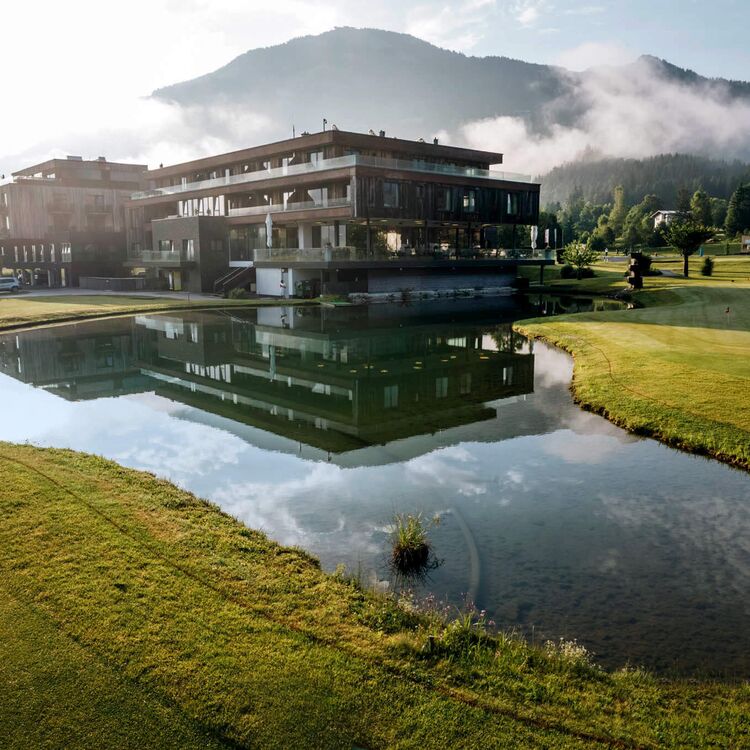
Start with fixed constraints, not your wish list. How many beds do you actually need? Genuine ski-in/ski-out, or just reasonably close? What is your group’s ability spread? Set those first, apply the activity filter, and the platform surfaces a relevant shortlist – shorter and more useful than anything you build yourself across five competing websites.
Then consider timing. January and February peak season versus March – when snow quality is often still excellent but school holiday pressure has eased – changes both availability and price. A trip that felt out of reach in early February can look completely different for the second week of March.
One Thing to Know Before You Book
Here is the honest part: a curated portfolio of 45-plus properties is still a selection, not the exhaustive universe of every rental in the Austrian Alps. Individual chalets operating outside this network might suit a very specific brief that falls between the categories – a property with a particular view, a niche location requirement, or a maximum guest count that the platform does not cover. If your requirement is genuinely unusual, you may still need to look elsewhere for part of your search. That is worth knowing before you assume you are seeing everything available.
For most ski holiday groups – couples, families, friends with mixed ski levels and some flexibility on location – a single platform covering this range of regions and accommodation types handles the planning process more cleanly than the fragmented alternative. The accommodation decision, once you have made it well, stops being the hard part. The mountains handle the rest.
