



There is a moment every fashion season when you spot something on the runway and think, “I want that – but will I ever actually wear it?” Not years from now. Not in some watered-down version that has lost all the energy of the original. Right now, while the trend is still alive and electric and actually worth wearing. That frustration is real, and it is one that a lot of mid-market brands have quietly accepted as an unavoidable fact of the fashion calendar. Stradivarius has not.
The brand sits inside the Inditex family – the same machine that built Zara’s legendary responsiveness – and it uses that infrastructure in ways that are genuinely worth understanding. Not because it is some flawless system. It is not. But the mechanics behind it change the way a trend-conscious shopper can actually dress week to week – fast, intentionally, without waiting for anyone’s permission.
The Inditex Supply Chain – What Actually Makes It Different
Most fashion brands – even ones that market themselves as trend-led – are working from a calendar that was set six to nine months ago. Buyers attended trade shows. They placed orders with manufacturers abroad. Then waited for production runs to complete, and waited again for containers to cross an ocean. By the time that maxi dress from last autumn’s runway lands on a shop floor in spring, the cultural moment that made it exciting has often already moved on. You have probably felt this. You look at a rack and think, “this was everywhere on Pinterest three months ago.”
Inditex built a deliberately different model. A large share of production happens in facilities that are geographically close to the European market – Spain, Portugal, Morocco, Turkey – which means shorter shipping windows and much faster revision cycles. When a silhouette or fabric or colour starts generating genuine buzz, design and production teams can react within weeks rather than quarters. For Stradivarius specifically, that capability is pointed squarely at its core audience: young women who are actively paying attention to trends and want to dress in them while they still feel relevant, not archaeological.
New drops land in-store and online on a rolling basis rather than two big seasonal pushes. That means – if you are the kind of person who checks new arrivals regularly – you can genuinely track trend emergence in close to real time. A colour story picks up momentum at fashion week. Within a few weeks, you are seeing it on product pages. That turnaround is meaningfully faster than most of Stradivarius’s direct competitors at the same price tier.
Spring Summer 2026 as a Case Study in Trend Speed
This season is a useful lens. The SS26 runway across Milan and Paris pushed hard on a handful of stories – clean sculptural denim, sheer layering with visible structure underneath, and sun-washed earthy tones running from terracotta to warm ivory. These were not obscure micro-trends. They were widely covered, widely discussed, and widely wanted.
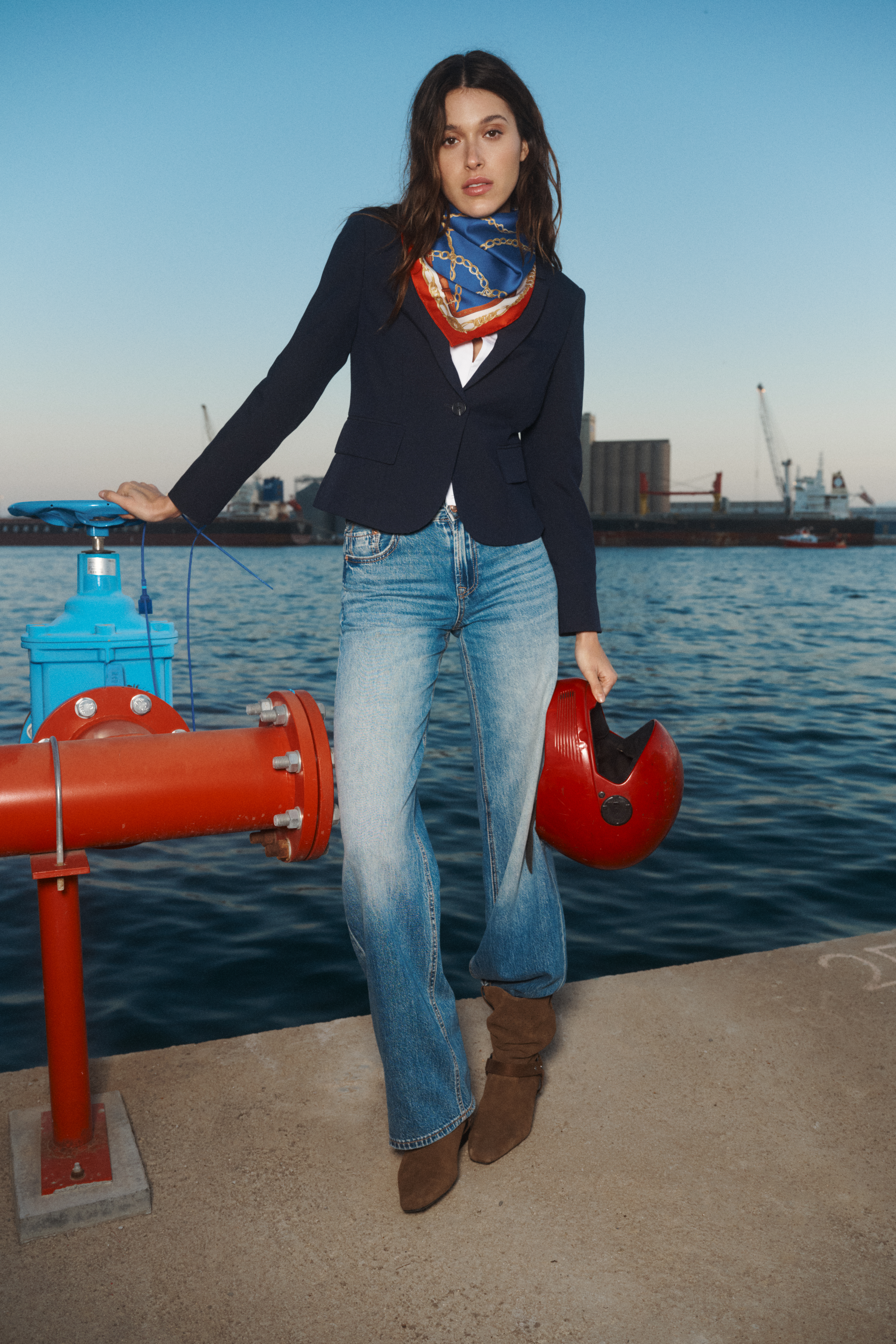
Stradivarius moved on all three stories. The denim campaign this season is notably strong – wide-leg and straight-cut silhouettes, thoughtful wash treatments, cuts that read as considered rather than throwaway. The kind of denim you would not be embarrassed to wear next to pieces that cost twice as much. Sheer layering appeared in the collection early, with lightweight pieces designed to work over fitted basics in exactly the way runway editorials demonstrated. And the colour palette throughout spring is exactly what you would expect from a brand watching the mood board closely.
The honest qualifier: speed does not guarantee quality in every individual piece. Some items from any fast-fashion brand will not survive five seasons. That is a fair criticism and worth factoring in. But for trend-forward pieces – the sculptural denim, the sheer layer you wear for one brilliant summer – the value calculation changes. You are not buying a wardrobe heirloom. You are buying a wearable piece of a cultural moment, at a price point that does not require three weeks of deliberation.
Digital Tools That Close the Discovery Gap
Trend speed is not just about production. It is also about discovery – finding the right piece before the window closes. Stradivarius has invested meaningfully in digital infrastructure that compresses that discovery time. The brand runs “Stradishoppers TV,” a personal shopper service on TikTok where real stylists walk you through new arrivals and show how pieces actually move and layer on a body. The engagement rate on that channel is exceptionally high for a brand account. Which tells you the content is actually useful, not just promotional filler.
Stradivarius was also the first Inditex brand to run a fully AI-generated campaign, back in March 2023. I will admit I was sceptical when it launched – AI imagery in fashion still sometimes looks slightly wrong in ways that are hard to articulate. But the campaign itself was beside the point. The move signalled a brand genuinely interested in using new tools to move faster, and that philosophy carries through to practical features like predictive checkout in-app and mobile fitting-room booking in physical stores. These are not flashy additions. They reduce the small frictions that make the difference between buying something while it is in stock and finding it sold out a week later.
The Sustainability Picture – More Complicated Than the Headlines
Any honest piece about Stradivarius trend speed has to sit with the sustainability question. Fast fashion and environmental responsibility pull in opposite directions by definition, and pretending otherwise would be naive. The brand has made verifiable commitments – TRUE Zero Waste Platinum certification at its Barcelona headquarters and Sallent logistics centre, LEED Gold building certification, a documented 95% reduction in single-use plastic achieved by 2023, and a net-zero target set for 2040. Those are real numbers with third-party verification behind them.
What those numbers do not resolve is the broader question of whether producing more clothes faster is compatible with a healthy planet long-term. That question does not have a clean answer in 2026. What the certifications confirm is that within the fast-fashion model, Stradivarius is making meaningful operational improvements rather than just printing green slogans on shopping bags. Whether that is enough is a question each shopper has to work out for themselves. Worth sitting with. Not easy to dismiss in either direction.
Why This Matters for How You Actually Dress
Here is the practical upshot. If you follow trends – not obsessively, but enough to want to wear what feels current – the gap between “I saw that on the runway” and “I can actually buy that” has real implications for your wardrobe. Trends have a lifespan. Some are long. Others burn bright for a season and are done. Waiting six months for a trend piece to finally arrive in stores can mean arriving at a party that has already ended.
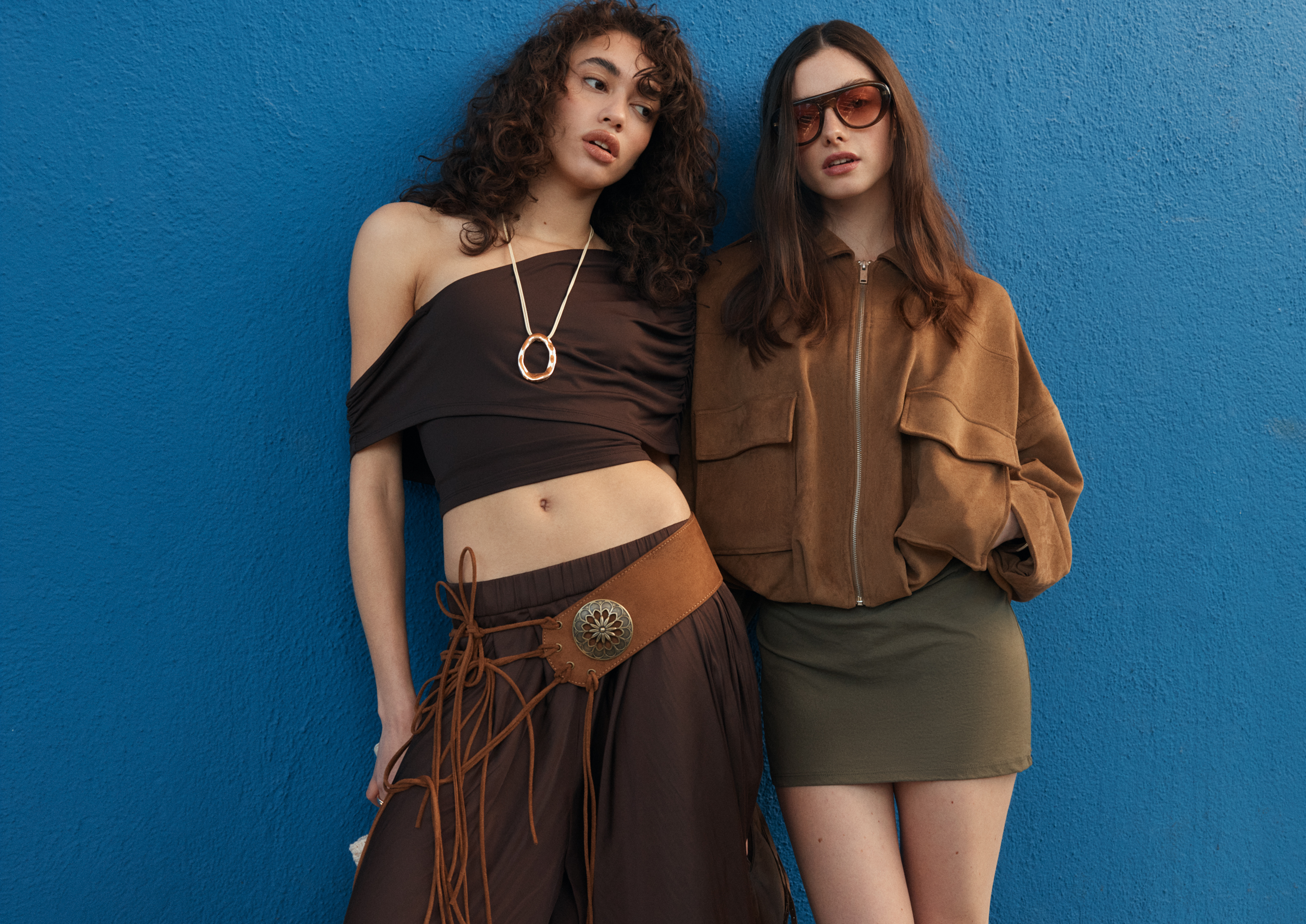
Stradivarius compresses that gap in a way that is genuinely useful for a style-conscious budget. The brand covers a wide range – dresses, boho separates, swimwear, accessories, and denim that punches above its price class – and it does so without the premium markup that would make trend-chasing an expensive habit. With 915 stores across 62 countries and same-day delivery available in major cities including New York, Madrid, Paris, London, and Shanghai, availability is rarely the problem. Knowing what to look for, and looking at the right moment, is the whole skill.
The one limitation worth naming honestly: not every trend makes it from runway to Stradivarius in its purest form. Occasionally a silhouette arrives slightly softened, a fabric slightly simplified, a colour slightly safer than the original. The brand is translating for a broad young-adult market, not a fashion insider audience. That translation is usually well done. But if you want the razor-edge version of a runway look, you may need to supplement with more specialist pieces. For the vast majority of trend dressing, though, the version that lands at Stradivarius is exactly what you need – and it arrives while the trend is still worth wearing.
The Inditex machine is not magic. It is logistics, geography, short production runs, and fast feedback loops – all pointed in the same direction. The result, for a shopper who wants to wear trends while they are still alive, is a brand worth paying close attention to. Browse the current collection at Stradivarius and see exactly which runway stories are landing right now.
