


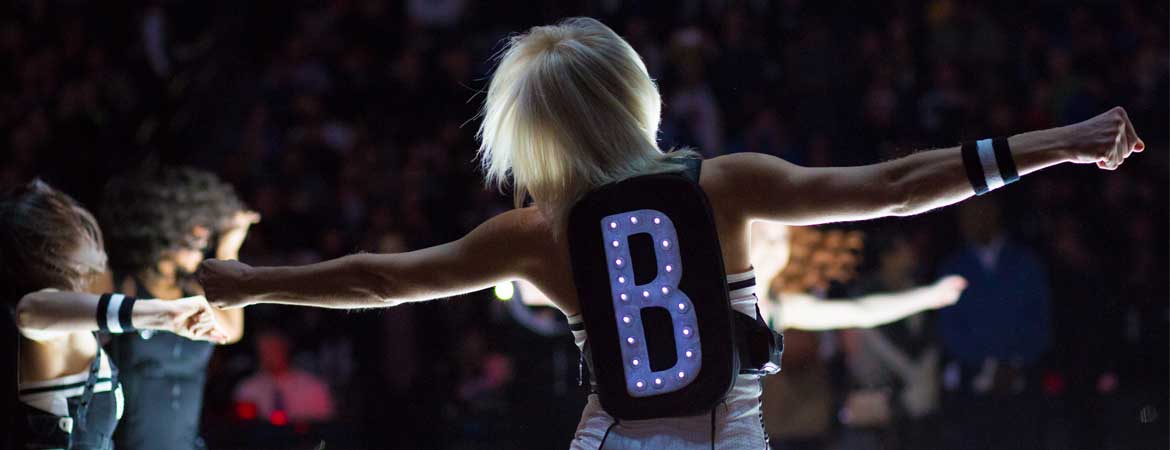
There is a very short list of sports garments that make the jump from arena to street without looking like you forgot to change. The vintage baseball tee. The retro track jacket. And – if you follow the right corners of fashion culture – the Brooklyn Nets jersey. Not every jersey. Specifically, the black-and-white, stripped-down, art-world-adjacent versions that the Nets began producing after one of the most dramatic visual rebrands in NBA history.
Was it always obvious this would happen? Honestly, no. When the New Jersey Nets announced they were moving across the Hudson River to Brooklyn in 2012, plenty of observers treated it as a real estate story. A new arena. A new borough. Some relocated fans. The fashion implications were not exactly front of mind. That read turned out to be spectacularly wrong.
The 2012 Rebrand That Broke the Formula
Most NBA rebrands go something like this: swap a color, add a gradient, update the wordmark, and call it modern. The Nets did something far more radical – they erased almost everything. New ownership brought in Jay-Z as a part-owner and creative force, and the team hired Futurebrand to develop a visual identity that looked less like traditional sports branding and more like a Scandinavian lifestyle label. Black. White. Clean helvetica-style typography. A simple interlocking “NJ” mark replaced by an equally restrained shield.
The result was a jersey that was, by NBA standards, almost aggressively minimal. No team in the league had gone that route with such conviction. And that restraint turned out to be exactly what streetwear culture had been waiting for from the sports world. You could wear the black Nets jersey over a white long-sleeve in October and look deliberate rather than accidental. That is not something you could say about most team gear of that era.
The market responded fast. In the 2012-13 season, the Brooklyn Nets led all NBA teams in merchandise sales – number one, not just a top seller. For a franchise that had spent years in the shadow of the Knicks, that number was staggering, and it had almost nothing to do with on-court results. They were buying the aesthetic.

Brooklyn as a Cultural Address
Geography matters more in fashion than people give it credit for. The Nets did not simply move boroughs – they planted their flag in what was, by 2012, the cultural capital of creative America. Brooklyn had already absorbed the post-Giuliani Manhattan exodus of artists, musicians, and designers. Williamsburg was a global reference point. The Brooklyn name alone carried a cachet that “New Jersey” – fairly or not – simply did not.
The borough’s cultural mythology runs deep. Jean-Michel Basquiat grew up in Brooklyn. The Notorious B.I.G. – Biggie Smalls – was born in Clinton Hill and became one of the most important figures in hip-hop history. These are not minor cultural associations. They are the kind of authentic, earned credibility that marketing teams spend millions trying to manufacture and usually fail to produce. The Nets inherited it by address.
And they leaned into it hard. The City Edition jersey program – the NBA’s platform for alternate uniforms with stronger conceptual and artistic DNA – became the Nets’ playground. Designs that nodded to graffiti art traditions, subway culture, and the kind of raw visual energy that Basquiat himself channeled – these were not subtle nods. They were direct invitations into a conversation about where sports and art actually overlap.
KAWS and the Collector-Item Moment
If the 2012 rebrand established the Nets as fashion-adjacent, the collaborations with KAWS pushed the jersey firmly into collector territory. KAWS – the pseudonym of Brooklyn-based artist Brian Donnelly – built his reputation through the same intersection of street culture, contemporary art, and commercial production that defines the modern hypebeast economy. His work sells at Sotheby’s and in Supreme drops. That combination is rare and genuinely credible.
The KAWS x Nets pieces operated in an entirely different register from standard licensed apparel. These were not jerseys that happened to feature an artist’s logo. They were objects that existed somewhere between wearable garment and limited art edition – the kind of thing you might frame as seriously as wear. For a segment of fashion consumers, owning one became a marker of taste rather than just team loyalty.
Does this elevate every Nets jersey to art object? No – and that is worth saying clearly. The standard game-day replica is still a sports jersey. But when your team has worked with one of the most commercially successful contemporary artists alive, some of that cultural association sticks to the whole wardrobe. That is how brand elevation works.
Why the Palette Works Everywhere
Fashion people talk about neutrals the way wine people talk about terroir – sometimes with more reverence than the subject probably warrants. But the black-and-white palette genuinely solves a real problem. Red and blue, orange and blue, purple and gold – these are attention-demanding color stories that dictate what you can and cannot wear around them. Black and white go with everything. The Nets jersey becomes a building block rather than a destination.
That said – and this is the honest part – the same palette that makes the Nets jersey versatile also makes it easy to clone. The market is full of black-and-white sports-adjacent pieces with similar silhouettes. The actual Nets jersey earns its premium through provenance and cultural association, not through any functional superiority. If you are buying for pure utility, you have cheaper options. The story is what you are paying for.
The Arena as Fashion Context
There is one more piece of this puzzle that deserves attention: the physical space where the Brooklyn Nets actually play. Barclays Center opened in 2012 alongside the rebrand, and the arena itself is not incidental to the jersey’s cultural status. Designed by SHoP Architects, the building uses thousands of weathering steel panels that reference Brooklyn’s brownstone architecture. The exterior develops a patina over time. It looks, in other words, like a building that belongs to Brooklyn rather than one that was dropped there from a suburban sports park blueprint.
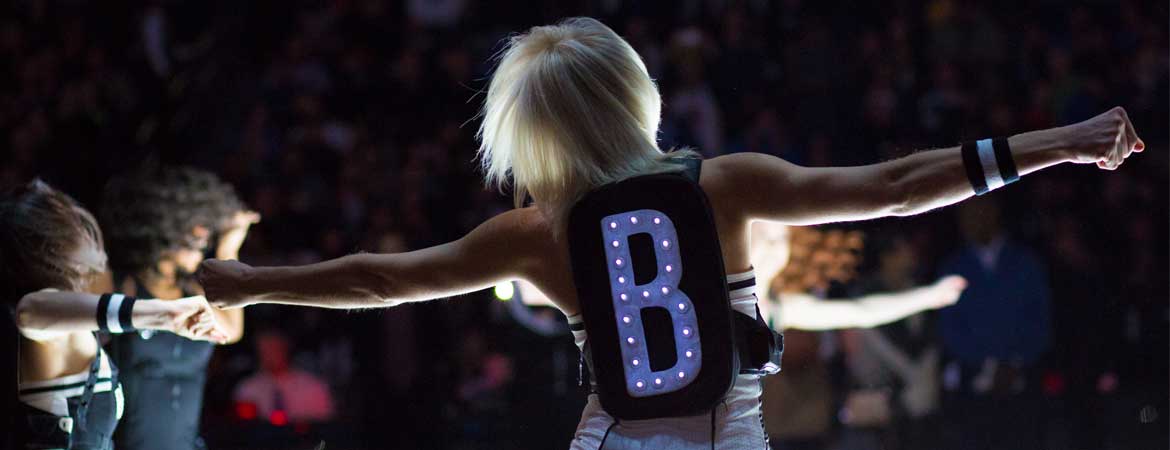
When you attend a Nets game at Barclays Center, you are not just watching basketball. You are in a venue that has hosted Jay-Z residencies, championship boxing, and some of the biggest concert tours to hit New York. The people in those seats follow jersey releases the way other people follow seasonal lookbooks. The arena functions as a recurring fashion moment, where what you wear actually matters and where the Nets’ aesthetic choices land in front of exactly the right crowd.
The Nets jersey earns its place in streetwear not because of what it says on the court, but because of what it says about you off it – a rare thing for a piece of licensed sports apparel to pull off.
Where It Stands Now
More than a decade on from the rebrand, the Nets are in a rebuilding phase. The super-team era came and went. The roster is younger and less decorated than the Kevin Durant years. But the jersey’s cultural position has proven more durable than any single player’s tenure – which is actually the most interesting thing about this whole story. The piece outlasted the stars who wore it.
That kind of longevity does not happen by accident. It requires a genuine alignment between a team’s visual identity and the culture it operates in. The Nets found that alignment in 2012 and have maintained it through every iteration since. The KAWS collaborations did not create the cultural credibility – they confirmed it. Can any other NBA team pull off the same? A few have tried. None have quite landed in the same place. You can copy the black-and-white palette. You cannot copy Brooklyn.
If you want to explore the Brooklyn Nets jersey range and current merchandise – from the classic black-and-white game jerseys to the latest City Edition releases – the official NBA site is the right place to start. The story behind the garment is worth understanding before you buy it. Now you have it.
