


There is a particular kind of guilt that comes with buying books. You pick one up, you see the price tag – and you put it back down. Twenty euros for a paperback you might read once. Thirty-eight euros for a hardcover you genuinely want. It adds up fast, and for anyone with real reading ambitions – the kind that involve shelves, not just a nightstand pile – the cost of building a proper home library can feel genuinely prohibitive. Or it did, until the math started changing.
The Real Cost of a Home Library – and Why It Stops People
A modest home library – say, 200 books spanning fiction, non-fiction, cookbooks, and a few classics – would cost somewhere north of three thousand euros if you bought everything new at retail. That is not a small number. It is the kind of number that makes people give up entirely, or settle for a digital reader, or accept that physical books are a luxury they cannot justify. Which is a shame. The case for physical books is strong: they do not require a subscription, they do not disappear when a platform shuts down, and they sit on a shelf and look like the room belongs to someone who thinks.
The problem has never really been books themselves. It has been the retail model. Full cover price on every title, regardless of whether that title is six months old or six years old, regardless of how many copies are sitting in a warehouse somewhere. This is where outlet pricing enters the picture – and where the entire calculus of building a library shifts.

What Outlet Pricing Actually Means for Readers
The term “outlet” gets thrown around loosely in retail. Sometimes it just means a small discount on last season’s stock. In books, though, the outlet model is more interesting – and considerably more generous. Titles that have passed their initial promotional window, or that were printed in higher quantities than the market absorbed, end up available at discounts that can reach 40, 60, even 80 or 90 percent off cover price. The books are not damaged. They are not review copies. They are simply not new releases anymore.
For a reader who is not chasing the release-day conversation, this is ideal. Honestly, most of what makes a book worth reading has nothing to do with when you read it. A Ken Follett novel published last year reads exactly the same as one published last month. A Colleen Hoover that everyone was talking about in autumn is still that same book in spring. The story does not expire.
The story does not expire. What expires is the marketing window – and that is exactly what makes outlet pricing possible.
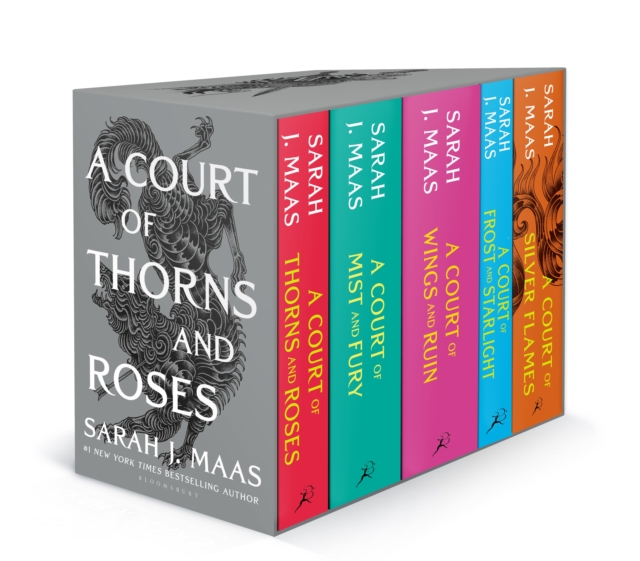
BookOutlet.fi operates precisely in this space. Their catalog spans Finnish fiction, Scandinavian crime, English-language bestsellers, children’s books, non-fiction, cookbooks, and hobby titles – hundreds of thousands of titles, available at discounts that can genuinely transform how you think about building a collection. A five-book box set that would cost full price at a high-street bookshop becomes a reasonable evening purchase rather than a considered splurge. That shift in how a purchase feels changes what you actually buy.
How to Actually Build a Library – Genre by Genre
The best home libraries are not random accumulations. They are curated – which sounds fussy, but really just means intentional. Here is a practical way to think about it, category by category.
Start with one anchor genre. For most readers this is fiction – the category where you already know your tastes, where you have authors you return to, and where a collection builds naturally. If you read fantasy or romantasy, a box set from a major series is a logical foundation. If your preference runs toward Scandinavian crime, that entire tradition is long enough and rich enough to fill several shelves on its own. Pick the genre you reach for first on a bad week. That is your anchor.

Add one non-fiction category that actually interests you. Not “books you feel like you should have” – a library built on obligation is one you stop adding to. If you cook seriously, start there. If history is your thing, build that shelf. The non-fiction section should make visitors want to ask questions, not signal effort.
Then, and this is where outlet pricing genuinely opens things up, build in exploration. At full retail price, taking a chance on an author you have never read feels financially risky. At 60 or 70 percent off, it just feels like reading. This is how libraries actually grow – not through careful, expensive purchases of guaranteed favorites, but through the kind of low-stakes experimentation that only makes sense when the individual price is low.
The Dual-Language Advantage
One feature worth paying attention to, particularly for readers in Finland or the Nordic region: a catalog covering both Finnish and English titles is rarer than it sounds. Most specialist discount retailers lean heavily one direction or the other. A store that stocks Colleen Hoover and Sarah J. Maas in their original English alongside Finnish translations – and carries Finnish fiction at the same discount levels – is genuinely useful for bilingual households, or for anyone whose reading language shifts depending on the book. Some stories simply work better in the original. Having the option matters.
Children’s Books Deserve Their Own Section
If you have children – or simply believe that good children’s books belong in any serious home library – the economics here are particularly compelling. Children’s books are expensive relative to their page count, and children are hard on books in ways that make full retail price feel painful. A collection built at outlet prices removes that calculation. You can buy generously, let books get loved and worn, and replace them without agonizing over it.
More importantly: a large children’s library, one with enough range and depth that a child always has something new to reach for, is genuinely one of the better investments in a reading habit. Access matters. Having books available in quantity changes outcomes – and outlet pricing makes that quantity possible.

The Honest Verdict
Building a real home library on a real budget is not a fantasy. It is a planning problem – one that outlet pricing largely solves. The math is straightforward: when individual books cost a fraction of their cover price, you can buy more books, take more risks, and cover more ground without the low-level anxiety that tends to follow full-price purchases. The library you end up with is fuller, more eclectic, and more genuinely yours than anything assembled one careful full-price purchase at a time.
The one honest caveat: the outlet model means shopping a curated selection rather than an unlimited catalog. Not every title you want will be available at any given moment – and if you are hunting for a specific new release, you may not find it at discount prices. That is a real constraint. The workaround is simple enough: keep a list, check back, and be willing to let the catalog surprise you. Some of the best books on any shelf were not planned purchases. They were just available, affordable, and exactly right.
That, more than anything, is what a home library built on outlet pricing actually offers – not just books you meant to buy, but books you would never have bought otherwise, at prices that made the risk easy to take.
