


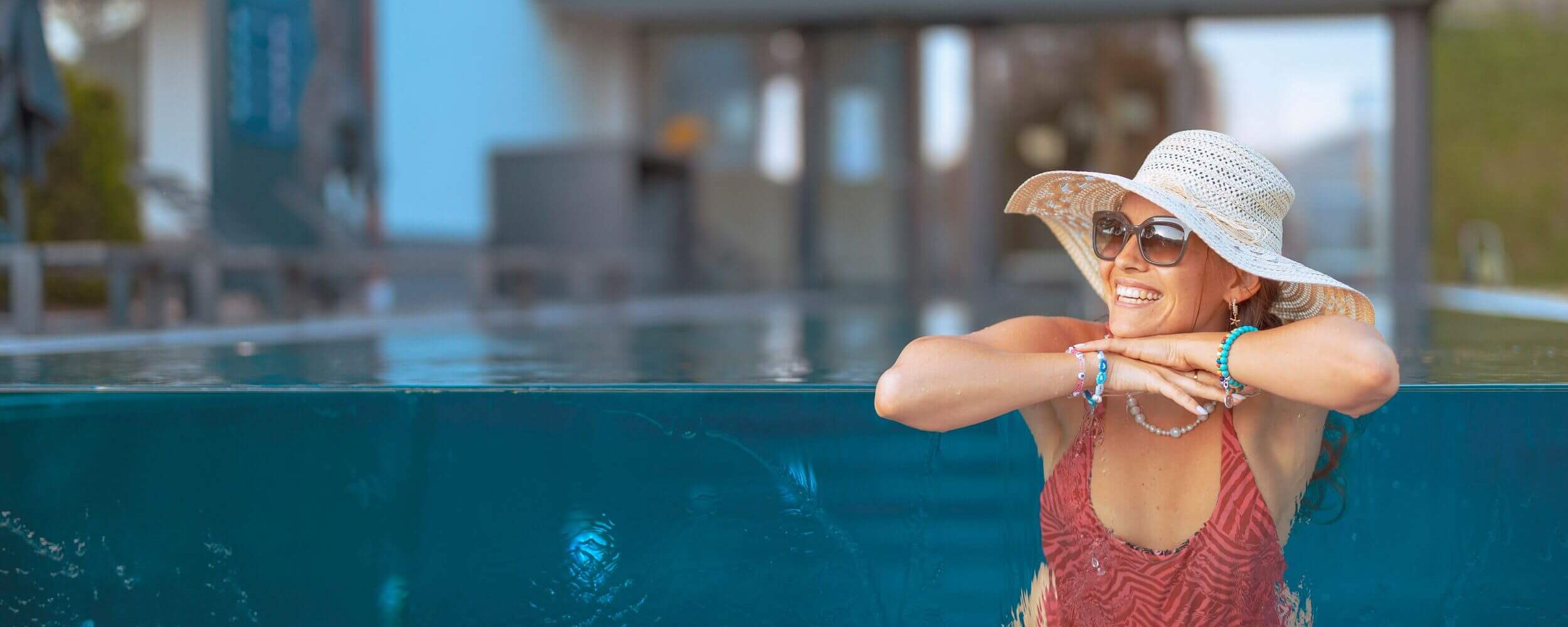
There is a difference between coming back from holiday and actually recovering. Most people feel it without being able to name it – the week away that leaves you almost as tired as when you left, the beach break that was fine but somehow not enough. Two weeks after returning, you are at the same desk with the same low-level stress and the same stiffness in your shoulders. Nothing was wrong with the trip. It just did not do what recovery requires.
Wellness tourism gets dismissed quickly – and honestly, some of that dismissal is earned. A lot of what passes for wellness travel is packaging more than substance, overpriced treatments layered onto ordinary hotels that happen to own a steam room. But when the location is genuinely doing physiological work rather than providing a backdrop for branded towels, the outcomes are different. The Austrian Alps are not scenery. They are a recovery mechanism – and the evidence behind this is more grounded than most people expect.
What the Mountain Environment Actually Does
Altitude has real physiological effects. At the elevations typical of Alpine wellness destinations – roughly 800 to 1,800 metres – the air carries a dramatically lower particulate load than any city environment. That shift registers within 24 to 48 hours of arrival, often before you have consciously noticed anything has changed. The ambient quiet of mountain valleys – not the curated silence of a spa, but the structural absence of traffic and urban noise infrastructure – has been consistently shown to lower cortisol, the primary stress hormone. Sunlight at altitude hits a broader spectrum and regulates circadian rhythm more effectively than urban light. Even gentle walking on mountain terrain activates different muscle groups and proprioceptive pathways than flat pavements do.
These are compound effects. No single element is a cure. But combined – cleaner air, different light, quieter sound environment, terrain-based movement – they produce a biological shift that urban hotels, however well-appointed, physically cannot replicate. The setting does real work before you have walked into the spa. Properties like those at Alps Resorts are built specifically in this altitude range across Austria’s five Alpine regions, which means the environment itself starts contributing to recovery before you have unpacked.
Why Sauna Culture Belongs in Your Recovery Framework
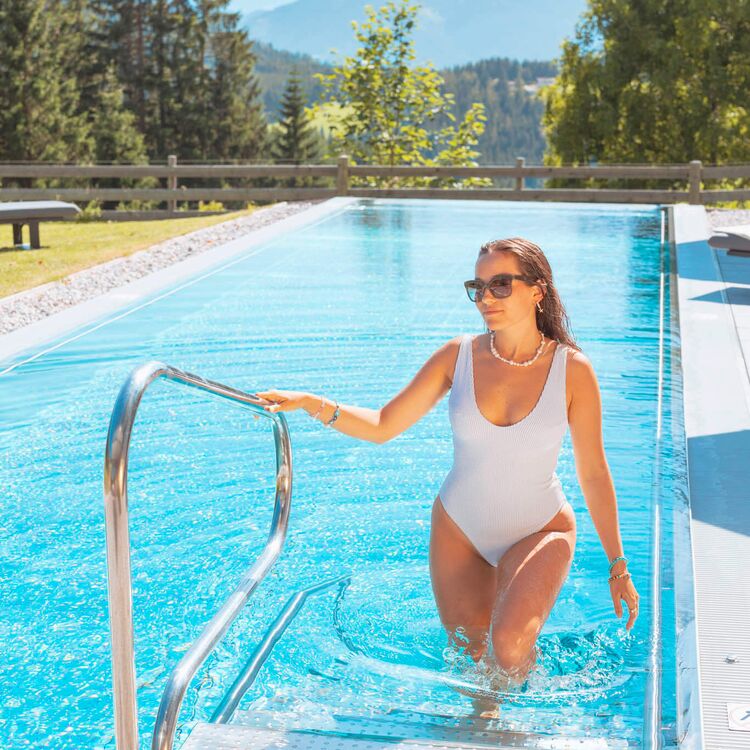
Austrian sauna culture is not a tourist feature added to Alpine hotels. It is embedded in how people in this region think about health maintenance. The evidence base for regular sauna use is substantial enough to take seriously – associations with reduced cardiovascular stress, improved sleep architecture, lower inflammatory markers, and what researchers describe as forced parasympathetic activation. Your nervous system is compelled to stop running stress responses when your core temperature rises to sauna levels.
The traditional progression matters: heat, cold plunge, rest, repeat. Each cycle takes roughly 20 minutes. By the second or third round, most people report a mental state they struggle to locate elsewhere in their normal lives – not sleepiness exactly, more like the absence of the background noise that modern life generates constantly. Three or four sauna sessions across a five-night stay are enough to feel the cumulative effect. That matches what the research on heat-cold cycling consistently suggests – heat-shock proteins, endorphin release, cardiovascular adaptation – though individual results vary, and the sauna science, I’ll admit, I had to look up before I believed it. If you want to experience that kind of facility as the main event of a stay rather than an afterthought, Alps Resorts categorises its properties by activity type so you can filter for wellness-primary hotels directly.
The research on nature immersion and stress recovery is consistent: sustained exposure to mountain terrain reduces cortisol more reliably than any spa treatment on its own. The setting does the heavy lifting. The treatments amplify what the environment has already started.
Choosing the Right Property – Category Matters More Than Stars
Most people go wrong here. They search for “spa hotel Austria,” find something with a four-star rating and a price to match, and book it – only to discover the spa is a single pool used mainly by ski guests who came for the slopes. The property’s core identity is not wellness. Wellness is an add-on positioned to capture a secondary market, and it shows.
The smarter approach is to filter by activity category before filtering by anything else. Properties where the wellness offering is the primary architectural and operational purpose – not a marketing appendage – deliver fundamentally different outcomes. A hotel that built its identity around thermal recovery has invested in that infrastructure differently than one that retrofitted a sauna into a disused basement. Is that obvious when you are looking at listing photos? Almost never. Which is why the filtering layer matters so much.
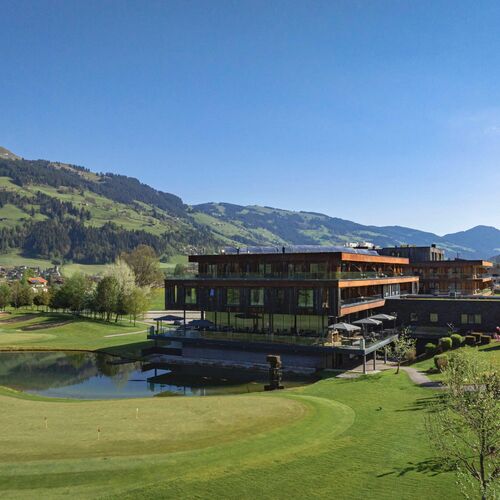
Alps Resorts organises its portfolio of over 45 properties across all five major Austrian Alpine regions exactly around this kind of activity-first matching. Each property is categorised by primary purpose – wellness, ski-in/ski-out, hiking, golf, or cycling – so you compare like with like rather than guessing from brochure photography. Private pools and saunas at select properties are presented as standard features rather than costly premium supplements requiring separate booking. The integrated ALPS KITCHEN restaurant format means dining is on-site, which matters more than it sounds when you are trying to maintain a genuinely restful rhythm and do not want to drive into a village for every meal.
How Long Is Long Enough
A weekend in a mountain spa is pleasant. Worth doing. But it is not enough to produce the physiological shift that justifies calling it recovery. The body takes two to three days to begin adapting – to establish a different sleep rhythm, to reduce the baseline cortisol load that urban environments maintain. A two-night stay gets you to the starting line of that process, and then sends you home.
Five nights appears to be the practical minimum for something genuinely restorative. I will be honest – I initially wrote off five nights as excessive, and I was probably rationalizing the shorter booking I could already afford. But if the alternative is two short breaks that each begin the process without completing it, a single five-night stay tends to produce meaningfully better outcomes. Sleep improves for weeks afterward. The stress response recalibrates at a level you can actually measure in how you handle the first difficult week back at work. The Alps Resorts portfolio includes accommodation types from holiday houses and apartments to hotels and glamping, so the five-night commitment does not have to mean a five-star budget.
The One Thing the Mountains Cannot Fix for You
None of this works if you bring too much of what you came to escape. The number of people who arrive at an Alpine wellness hotel with a full work inbox, answer emails throughout the sauna cycle, and wonder why day four feels identical to day one – that number is higher than it should be. The environment does an enormous amount of physiological heavy lifting. But it cannot override the decision to stay connected. That variable belongs entirely to you.
If you can manage five nights in the Austrian Alps with real disconnection – mornings in mountain air, proper sauna cycles, uninterrupted sleep, meals at a pace that is not driven by a screen – the recovery outcomes are measurable and they last. The Austrian Alps, and wellness-categorised properties like those in the Alps Resorts portfolio, provide the environment. Showing up for it is the part only you can control.
- Minimum stay: Five nights to produce lasting recovery – shorter breaks start the process but rarely complete it.
- Filter by activity category: Wellness-categorised properties have made an architectural commitment – the spa is not an add-on.
- Altitude range: 800-1,800m delivers air quality and circadian benefits without requiring acclimatisation periods.
- Sauna protocol: Three to four sessions across the stay, each with two to three heat-cold-rest cycles, produces cumulative physiological benefit.
- Traveling with a dog: Alps Resorts lists pet-friendly properties explicitly – filter for this early if it applies to you.
