



Sunglasses are one of those purchases where people routinely overthink the technical specs and completely ignore the one question that actually matters: does this frame look good on my face? You can obsess over polarization ratings and UV percentages, and still walk out of the store with a pair that makes you look like a befuddled tourist from 1997. The fit – the visual fit – comes first. Everything else is secondary.
This guide uses Eagle Eyes MX as the reference catalog – five genuinely distinct silhouettes (Aviator, Tiffany Tortoise, Rebel, Celeste, Rambler) across a range broad enough to illustrate real principles rather than just telling you to “pick what you like.” The fact that their TriLenium lenses block 99.9% of UV radiation is a bonus worth mentioning once – but it is not the point of this article.

The Four Face Shape Categories (And Why They Actually Matter)
Most face shape advice is either too vague to use or too rigid to be true. The underlying principle is contrast: frames that contrast your face’s dominant geometry create balance. Softer, rounder faces need angular frames. Sharper, more angular faces need rounder frames. Strong foreheads need width at the jaw. Strong jaws need visual weight drawn upward. Four categories – oval, round, square, heart-shaped – and one rule. The rest is just applying it.
Oval Faces: The Aviator Is Your Default, But Push Further
Oval is the face shape everyone references as “balanced” – cheekbones slightly wider than forehead and jaw, with a gently tapered chin. If you have an oval face, the honest answer is that almost any frame works on you. That is both a gift and a trap. People with oval faces often default to the safest, most conventional option – usually an Aviator – and never discover whether something bolder suits them even better.
The Eagle Eyes Aviator is a genuinely classic execution of the teardrop silhouette. Clean lines, a thin metal bridge, and a shape that has survived seventy-plus years of fashion cycles. For oval faces, it lands competent, polished, a little safe – and that is not a criticism. But oval faces should also try the Celeste, a geometric rectangular silhouette with softened corners that creates a more editorial look. If your wardrobe trends toward minimalism or you work somewhere visual identity matters, the Celeste is the less obvious choice worth making.
Round Faces: The Rebel Earns Its Name Here
Round faces – characterized by roughly equal width and length, with soft curves throughout – need angular frames to create the illusion of length and definition. This is where the Eagle Eyes Rebel does exactly what its name suggests and breaks the safe, predictable mold.
The Rebel frame has a distinctly angular geometry. Sharp corners, a wide horizontal span, and a bold brow line that reads as assertive without tipping into costume territory. On a round face, that horizontal emphasis elongates the face visually, while the angular corners introduce the contrast the face shape lacks naturally. The result is a frame that looks intentional rather than default – like you actually thought about what you were putting on your face, which is the goal of any good style decision.
The common mistake for round faces is reaching for similarly rounded frames – they repeat the face’s existing geometry instead of complementing it. Go angular, go wide. The Rebel checks both boxes without any apology.
Square Faces: The Tiffany Tortoise Does More Work Than You Think
Square faces have strong, defined jawlines and a relatively equal width across forehead and jaw – think sharp angles and pronounced bone structure. The styling challenge is the same every time: you need to soften the geometry without erasing what makes a square face look strong and interesting in the first place.
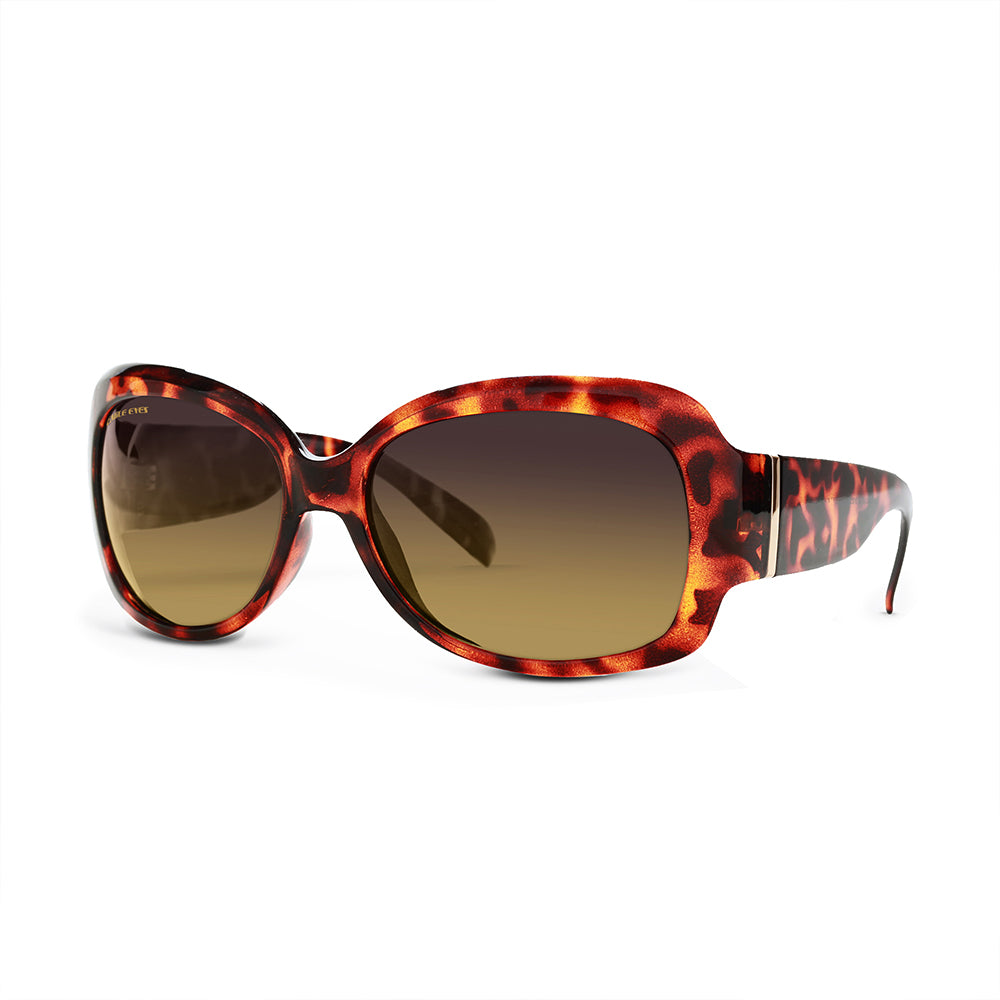
The Tiffany Tortoise is the most underestimated option in the Eagle Eyes lineup for square faces. The tortoiseshell pattern does more than people expect. The warm, mottled brown-and-amber tones break up the frame’s edge visually – creating a softer impression than a solid-color frame of the same size would produce. On a square face, this double-softening effect (curved silhouette plus patterned color) works together in a way that solid black frames at the same geometry simply do not replicate. The honest caveat: if your wardrobe runs toward bold colors or very modern cuts, the tortoise pattern may fight rather than complement. But for structured classic clothing – linen shirts, earth tones, tailored layers – this frame is a genuine find.
Heart-Shaped Faces: The Rambler and the Rule of Lower Emphasis
Heart-shaped faces are widest at the forehead and temples, tapering significantly toward a narrower chin. The styling objective is drawing visual weight downward – balancing the wider upper face with frames that add presence at the lower half of the visual field.
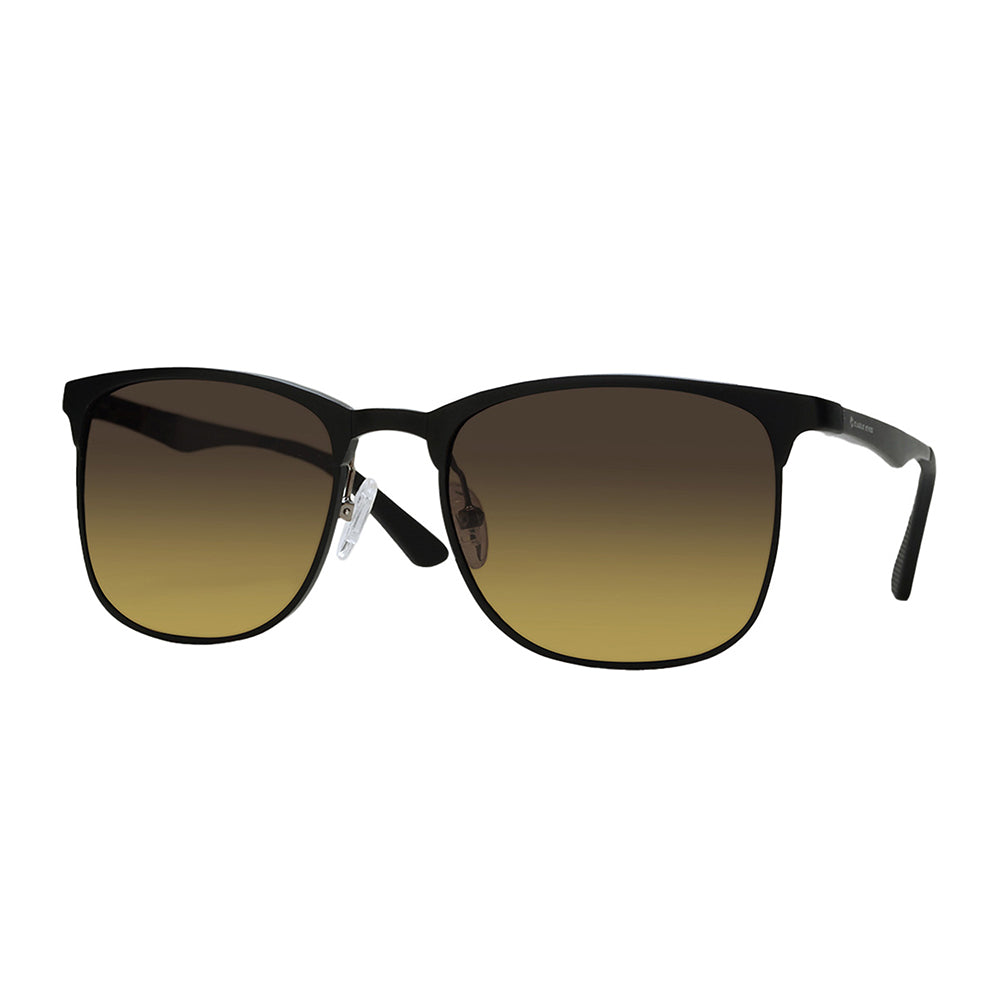
The Rambler frame addresses this with a wraparound-influenced, slightly larger silhouette that sits low on the face relative to the brow line. The broader lower lens area shifts visual emphasis away from a wide forehead and distributes it more evenly. It is not a dramatic effect, but in frame selection the small adjustments add up faster than people expect.
Narrow frames that concentrate weight at the brow line are the wrong move here – they reinforce forehead width instead of counterbalancing it. The Rambler sidesteps this with a more modern silhouette and better outdoor coverage than a standard teardrop achieves.
Matching Frames to Occasions, Not Just Face Shapes
Face shape is the foundation, but occasion is the filter. A frame that reads perfectly at brunch can look wildly out of place on a coastal hike – and sunglasses, unlike most clothing, follow you through very different contexts in a single day.
The Aviator is the most context-flexible frame in the catalog. It reads casual or dressed-up entirely based on what you pair it with – clean sneakers and a white shirt make it weekend, a blazer makes it intentional. Do you travel often and want one pair that works from airport transit to outdoor sightseeing? This is the safe call, and safe is not a problem when the versatility is this genuine.
The Rebel is lifestyle-casual and urban – music festivals, farmers markets, a brunch spot you found last week. It is a statement frame without becoming a costume, which is genuinely harder to achieve than it sounds. The Tiffany Tortoise is the most wardrobe-dependent option in the catalog. It rewards deliberate pairing and can look slightly incongruous thrown on over athleisure – not wrong exactly, just slightly off-register. The Rambler earns its place in high-exposure outdoor situations, where a frame with serious UV credentials matters beyond aesthetics.
The One Thing the Guides Don’t Tell You
Every face shape guide – including this one – is a framework, not a verdict. The rules are genuinely useful for narrowing a catalog from fifteen options to four or five worth trying. But they will not tell you which of those four or five you will reach for every morning, or which one makes you feel like yourself rather than like you are performing someone else’s style.
The honest admission: face shape theory oversimplifies. Real faces rarely fit cleanly into four categories – most are somewhere between round and oval, or square-jawed with a narrower forehead. Use the frameworks to get in the right neighborhood, then trust your own reaction to what you see in the mirror. That reaction is data. It tends to be more accurate than any algorithm.
The Eagle Eyes catalog is worth exploring if you want frames with real optical credentials behind the design. The NASA-derived UV research is a legitimate differentiator. But the reason to buy any frame is because it looks right on your face and works for how you actually live. The protection follows the fit. That is the only sequencing that matters.
