


There is a moment you have probably felt – looking at a piece of jewelry someone else is wearing and thinking, “I wish I could find something like that.” Not exactly like that. Something that actually reflects you. Your trip to the coast that changed everything. The name nobody ever spells right. The small crescent moon that has followed you since you were seventeen. Standard jewelry shopping rarely gets you there. Most pieces are designed to appeal to as many people as possible, which means they end up meaning something specific to almost no one.
That is the gap a well-built charm bracelet – built by you, charm by charm – is genuinely designed to fill. The question is not whether personalization is meaningful. It obviously is. The real question is whether the tools available to do it are actually good enough to justify the effort. This guide walks through how to use Rue des Mille‘s CharmBar configurator to build a 925 sterling silver bracelet that tells your story, practically and with intention.
Why Most Charm Bracelets Feel Like Someone Else’s Idea
Charm bracelets are not new – obviously. But the version that is compelling right now looks very different from what people were gifted in earlier decades. Those were largely static objects. Someone else picked the charms. You wore them because they were given to you, not because each one held a deliberate choice you made for yourself. The shift that has happened more recently is about agency. People want to be the curator, not the recipient. And that shift matters, because it changes what you are actually buying.
Standard charm jewelry shopping follows a familiar script. You browse a display, you find something close enough, you buy it. The problem is not the quality – it is the process. You are adapting yourself to what already exists rather than the other way around. For something as personal as a piece you intend to wear every single day, that backwards logic has real consequences. The bracelet ends up feeling like an approximation of you, not a record of you.
The CharmBar Configurator: What It Actually Does
When I first encountered the phrase “interactive charm configurator,” my instinct was skepticism. These tools are often underwhelming in practice – a handful of options, a digital rendering that barely resembles the real product, and a checkout button. The experience usually feels like filling out a form rather than actually designing something.
Rue des Mille’s CharmBar takes a genuinely different approach, and it shows in how the tool is structured. Rather than a fixed set of preset combinations with minor swap-out options, the configurator lets you build the bracelet from scratch. You choose the base – a 925 sterling silver chain in the style and length that fits your wrist. Then you move through the charm library, placing each piece where you want it, watching the composition evolve as you go. That visual feedback loop is more powerful than it sounds. Seeing the bracelet fill in is not just satisfying; it forces you to make editorial choices you might otherwise defer.
How to Actually Use the Tool – a Practical Walkthrough
Before opening the configurator, arrive with a loose intention. Not a rigid design plan – that tends to produce something that reads more like a spreadsheet than a bracelet. But a general direction. Are you building around a life chapter? A relationship? A set of things that represent who you are right now, rather than who you were five years ago? Even a rough answer to that question saves you from a finished result that feels random.
Start with your anchor charm. Not the most visually interesting one – the one that means the most. This is the charm that, if you had only one, would still make the bracelet feel worth building. It might be an initial. A symbol tied to a year that mattered. Something with a private meaning that nobody else would recognize from the outside. Build from there. Everything else exists in relation to that anchor, either reinforcing it or adding contrast. Most people, and this is a genuine observation rather than a rule, approach charm selection with too much logic and not enough instinct. They search for charms that “go together” visually before they find ones that actually mean something. Flip that order. Pick resonant charms first, then edit for visual balance.
Think in odd numbers. Three charms, five, seven – odd groupings carry a visual asymmetry that reads as intentional rather than arbitrary. Even numbers can work, but they tend to look more formal, less like a story accumulating. Vary your scales too. A mix of small and slightly larger charms creates rhythm. All the same size flattens the design. And resist over-filling. This is the mistake most people make when they have access to a large library. More is not more. Four to seven charms is usually the right range for a bracelet that still has breathing room – space where the silver chain itself becomes part of the composition.
A bracelet that holds your anchor charm, your initials, a symbol from a moment that mattered, and one purely aesthetic piece you just like – that is already a complete composition.
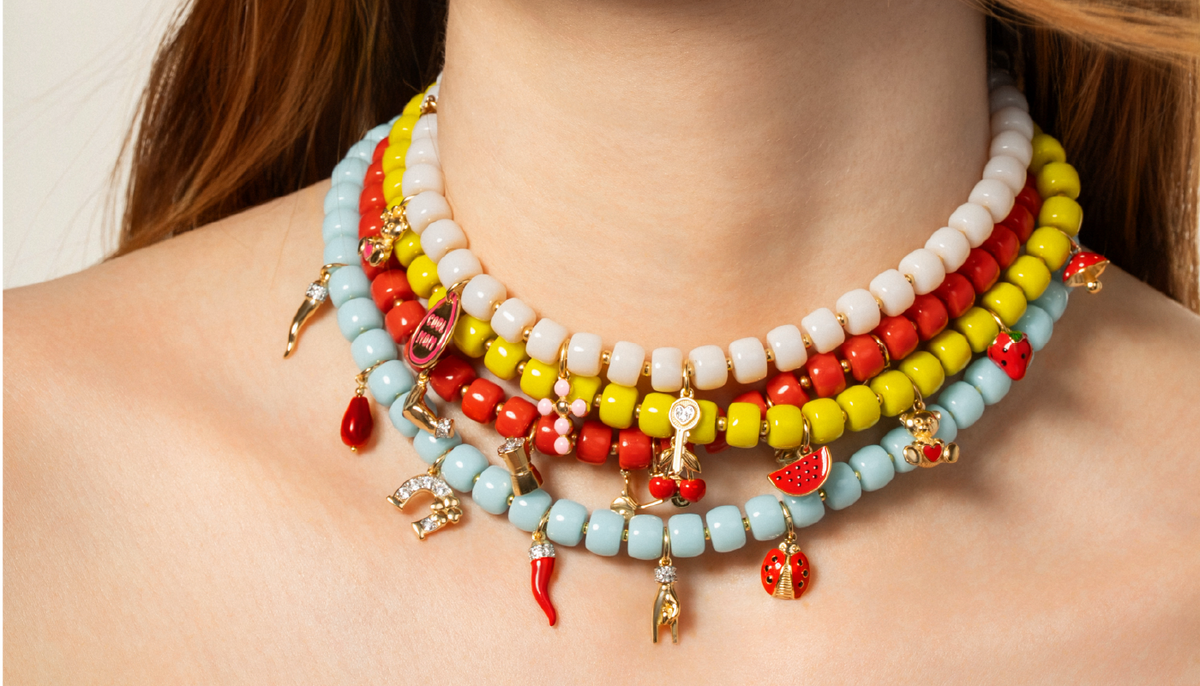
Rue des Mille’s charm library spans geometric forms, celestial symbols, letter charms for initials, zodiac references, small animals, and motifs from their seasonal collections – Urban Tales, Bold Heart, Gipsy Chic, Azul. The breadth means you can mix a very personal initial charm with something more decorative without the combination looking accidental. That range is genuinely useful, not large for the sake of being large.
The Engraving Layer – Where It Gets Genuinely Personal
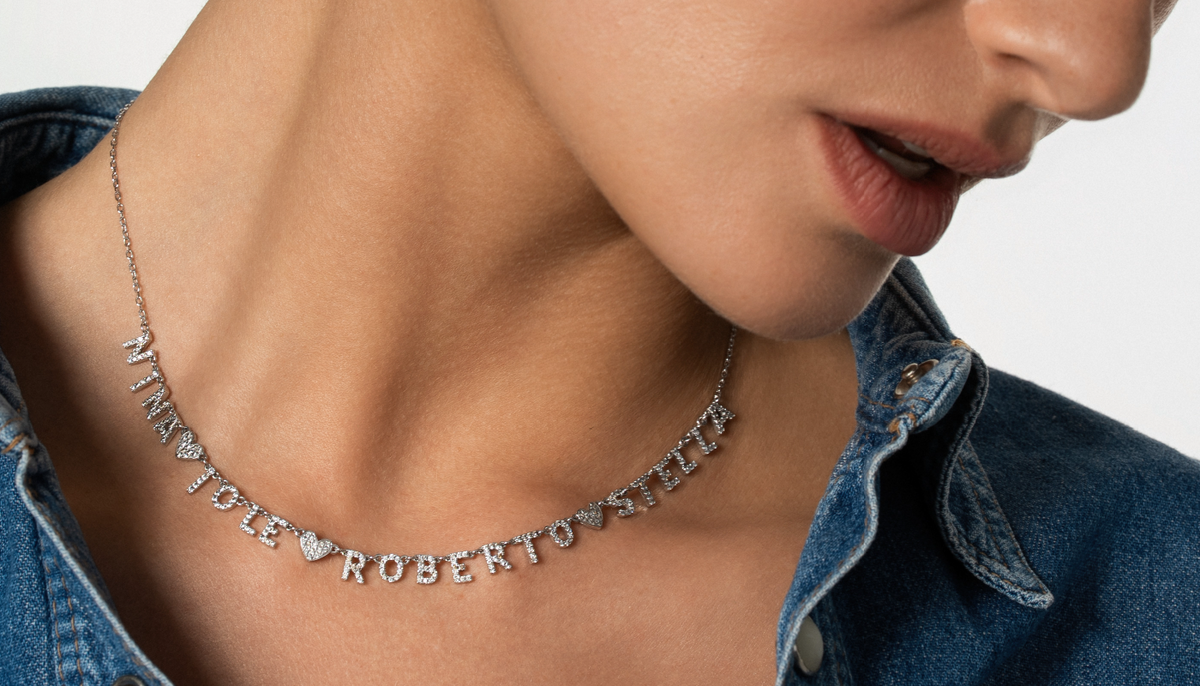
Beyond charm selection, Rue des Mille allows engraving of names, initials, and dates on select pieces. This is where the bracelet shifts from “things I like” to “things that are specifically mine.” An engraved name reads differently from a letter charm. It is quieter, more committed, less decorative. You use it when the meaning is not decorative. A date. A name you want to keep close without explaining it to anyone who asks.
The engraving option also changes how you think about the bracelet as a gift. Rue des Mille’s occasion-first positioning – dedicated gifting for graduations, baptisms, first communions, births – is built into how the brand structures its catalog. A charm bracelet configured for a graduation, with the graduate’s initial and a small compass charm, already engraved before it is wrapped? That is a gift with a specific emotional weight that a generic piece of jewelry cannot achieve. The personalization is the reason it stays. It does not end up in a drawer eighteen months later.
Material Choices – Silver, Gold, and the Decision Between Them
Rue des Mille works in two primary materials: 925 sterling silver and 18K gold. For the CharmBar, sterling silver is the entry point and also, honestly, the most practical choice for everyday layering. Silver reads versatile – it works with denim, with a blazer, with a summer dress – in a way that gold sometimes does not, depending on what else you are wearing. And if you are buying for a milestone gift, the 18K gold option gives the piece a warmth that reads as occasion-appropriate without being over-formal.
Both materials are real, not plated – which matters for longevity. Silver tarnishes if neglected, but it polishes back without much effort. It ages with you. For a piece meant to collect meaning over time, that quality is fitting rather than a drawback.
Layering the Bracelet Into Your Everyday Wardrobe
Once you have the bracelet, the question becomes how to wear it. A charm bracelet occupies a different visual space from a simple bangle – it has movement, it catches light, it makes a quiet sound. For daily wear, that low-level awareness of something personal you are carrying is, for many people, the entire point.
Sterling silver layers naturally with other silver pieces. If you already wear a plain chain bracelet, the charm bracelet sits alongside it comfortably – the difference in texture and visual weight reads as intentional contrast rather than clutter. A few practical principles that actually hold up: odd numbers stack better than even. Keep at least one piece in the stack very simple – a thin band, a cord – so the charm bracelet has contrast to read against. And think about width. A charm bracelet needs either something slimmer or something dramatically wider next to it to sit well. Two medium-width bracelets side by side just compete.
The Made-in-Italy Provenance and Why It Matters Here
Rue des Mille is based in Arezzo, Tuscany. Arezzo has been a center of goldsmithing for centuries – this is not marketing language, it is geography. The city produces a significant share of Italy’s fine jewelry, and the craft traditions there are real and traceable. For a brand whose entire value proposition is personalization and material quality, provenance is not a footnote. It is part of why the customization system works at the level it does. All pieces are handcrafted there. For a bracelet you are building charm by charm, that means each element was made with the same craft standard – the chain, the clasp, every individual charm. That consistency shows when you hold the piece.
An Honest Verdict
The CharmBar configurator is one of the more thoughtful personalization tools in this category. It gives you real control, real materials, and a visual building process that feels closer to design than shopping. The Italian provenance is verifiable and relevant. The engraving option extends the personalization further than most competitors are willing to go. For milestone gifting – or for building something you genuinely want to wear every day for years – the approach is right, and the craft behind it is real.
The one genuine limitation worth naming honestly: the charm catalog is curated, not unlimited. If you have a specific symbol in mind that sits outside Rue des Mille’s collections, you will not find it here. The brand refreshes seasonally, so the catalog grows, but it remains a catalog rather than an open commission system. For most people building a personal bracelet, that is not a constraint. For someone with a very specific visual vocabulary and unusual references, it is worth knowing before you arrive expecting infinite options.
Start with one charm that means something real. Build from there. That is the actual instruction, and it works better than any more complicated framework you might bring to the process.
