


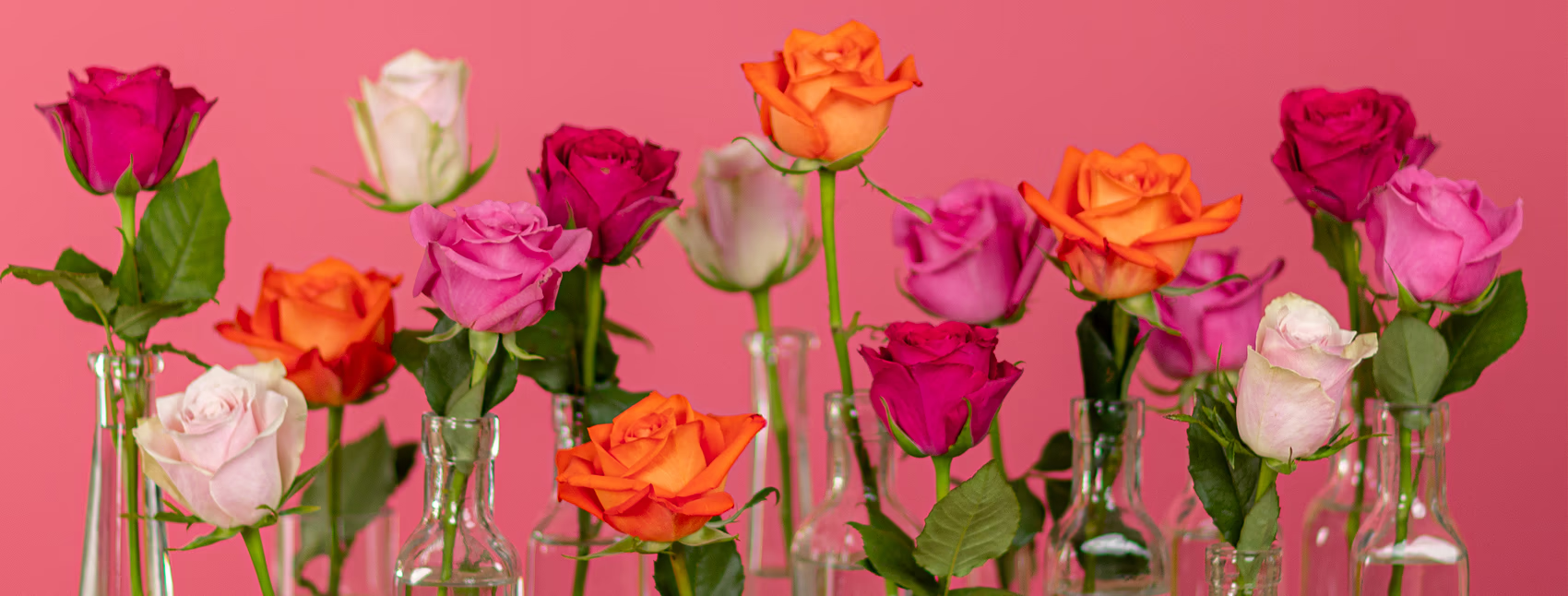
Here’s a confession that probably sounds a bit ridiculous: I used to think fresh flowers were a luxury reserved for dinner parties and hospital bedside tables. Something you bought to impress guests or to say “get well soon” – not something you just… had at home, for yourself, on an unremarkable Tuesday. That view changed slowly, then all at once.
It started when a friend kept a small bunch of tulips on her kitchen worktop every single week without fail. Nothing extravagant. Nothing Instagram-staged. Just flowers, in a plain glass vase, catching the afternoon light. Visiting her place always felt different from other flats – calmer, somehow more intentional. When I finally asked her about it, she shrugged and said she’d read something about mood and biophilia and hadn’t stopped since. That was enough to make me curious.
What Actually Happens When You Live With Flowers
The honest answer is that the research on flowers and mood is more interesting than the wellness industry usually lets on. Studies from Rutgers University found that flowers triggered immediate positive emotions in participants – not vague contentment, but measurable shifts in reported happiness that lasted days. Separate research has linked the presence of plants and flowers in living spaces to reduced anxiety and lower perceived stress. Notice the word “perceived” there. That’s actually the interesting bit.
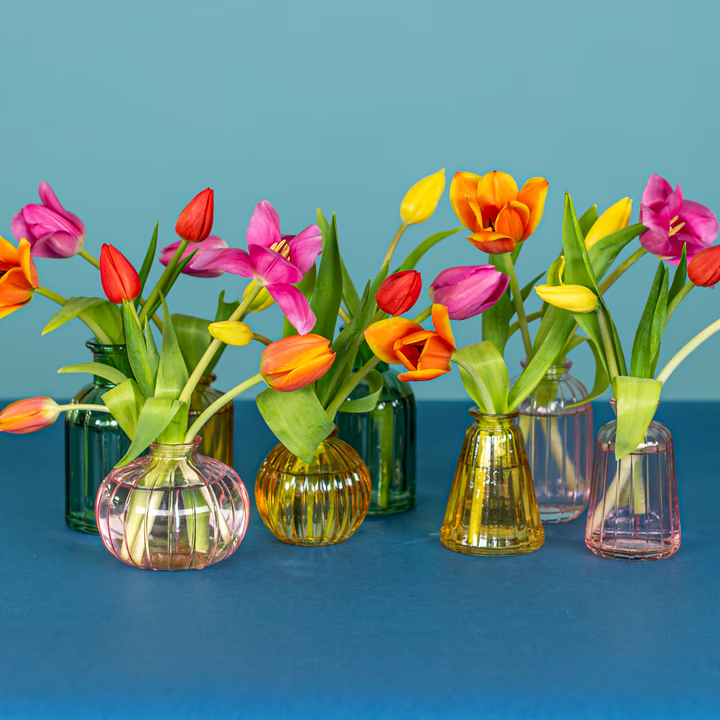
Your brain is constantly scanning its environment – reading signals about whether a space is safe, pleasant, worth being in. A room with living things reads differently to your nervous system than a room without. Flowers carry deep evolutionary weight: they signal warmth, growth, and care. You don’t consciously think any of this. It just lands.
Air quality is the part where people get a bit overenthusiastic, so let me dial that back. A single bunch of flowers isn’t going to dramatically purify your living room the way a HEPA filter does. That’s probably overstating the effect. What flowers do contribute is a small increase in humidity from transpiration, which in dry indoor air – especially in winter with central heating running flat out – can make a room feel less harsh. Not transformative. But genuinely noticeable.
The Aesthetic Shift Is Bigger Than You’d Expect
Here’s where things get more surprising. The visual impact of a fresh bouquet in a room is disproportionate to its size. Interior designers have known this for years, which is why you’ll see flowers in virtually every staged home shoot and hotel lobby on earth – they do something structurally to a space that furniture and paint can’t quite replicate.
Flowers introduce organic shapes into environments that are otherwise dominated by right angles. Most rooms are built from straight lines – walls, window frames, shelving, sofas. A bouquet breaks that geometry. It adds something unpredictable and alive that the eye genuinely wants to rest on. Place a bunch of something seasonal on a dining table or kitchen island and the whole room anchors differently. It’s not decorating in any laboured sense. It’s simply adding contrast that works.
Why “Weekly” Is the Magic Word Here
One bunch of flowers at Christmas doesn’t do much. Buying flowers only for occasions – birthdays, anniversaries, apologies – trains your brain to associate them with events, not with everyday life. The shift happens when flowers become routine. Weekly, or close to it. That’s when the mood effect compounds.
Think about it behaviourally: a regular ritual of choosing flowers, arranging them, refreshing the water, watching them open – that’s a small but consistent act of attention to your space. And attention to your environment ripples outward into general mood. It’s similar to why making your bed is widely reported as a keystone habit. The act itself isn’t the point. The signal it sends is.
The longevity question matters here too. Flowers delivered in tight bud can last eight to twelve days easily, sometimes longer if you change the water and trim the stems. That makes one delivery per week or fortnight realistic without constant wilting disappointment. Supermarket flowers, cut and already open, often look great for two days and sad for five. The economics of buying properly sourced stems that arrive closed are genuinely better than they first appear.
The Wellness Collection Angle – More Than a Marketing Label
Some florists have started curating collections specifically around the wellbeing angle – grouping varieties that are known for calming scent profiles, soft colour palettes, and longer vase lives. Serenata Flowers, one of the UK’s longest-running online florists (trading since 2003, with over 10,000 Trustpilot reviews), offers seasonal and wellness-focused ranges that lean into this idea properly – not just as branding, but in the actual curation of stems.
What stands out about that approach is that it takes the selection work off your plate. If you’re buying flowers for the mood benefit rather than a specific aesthetic, having someone with genuine botanical knowledge pre-select varieties that work together – in colour, in scent, in longevity – removes the anxiety of not quite knowing what to pick. And the delivery model (flowers sent in bud, from growers rather than through wholesalers) means you get a longer useful life from each bunch, which is exactly what the weekly ritual requires.
Where to Actually Put Them
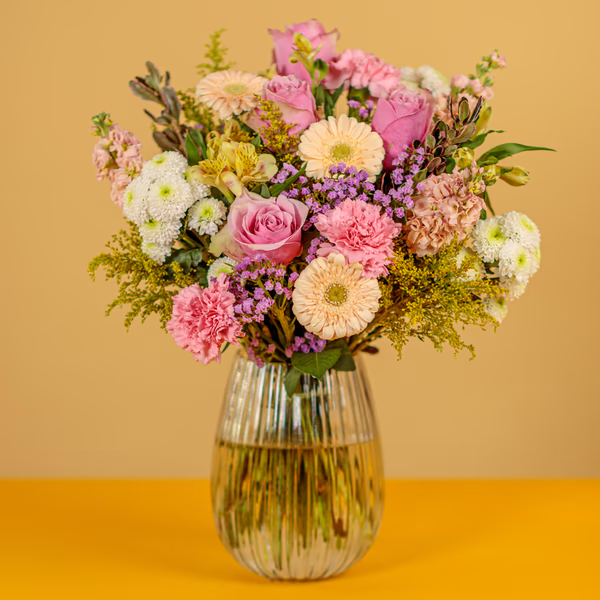
Placement matters more than most people realise. The standard move – flowers on the dining table – is good but not always the most impactful choice. Consider high-traffic areas you pass through repeatedly during a day. The kitchen counter is underrated: you spend real time there, often doing low-key tasks, and a bunch of flowers nearby shifts the tone of even the most mundane washing-up session.
The bathroom is genuinely one of the best rooms for flowers if you have north or east-facing light – high humidity is actually good for many stem types, and it’s a room where you’re likely to be relatively still and present. A bedroom works beautifully for heavily scented varieties – stock, freesia, hyacinth – because the fragrance is subtle enough at night not to overwhelm but present enough to register on waking. That first-moment-of-consciousness scent association is a mood-setter that’s hard to replicate with any other home decor choice.
Fresh flowers in a bedroom – specifically something fragrant like freesia or stock – create a scent association that hits you on waking, before you’ve had time to build any resistance to it. It’s a mood intervention that requires absolutely zero willpower.
The Honest Verdict
Fresh flowers at home work. Not in a cure-all, wellness-industry-oversell way, but in a real, repeatable, daily-life way. The mood shift is genuine, the aesthetic impact is disproportionate to the cost and effort, and the ritual of having them creates a kind of environmental attentiveness that spills over into how you feel in a space. Regular beats occasional every time. Seasonal beats generic. In-bud beats already-open.
The one honest flaw in all of this? It requires consistency, and consistency requires remembering – which is harder than it sounds when life gets busy. A subscription or a standing order reminder helps. Without that, the habit tends to lapse exactly when you most need the mood lift. That’s not a reason not to start. It’s just the thing to solve for if you want the benefit to stick.
Start with one bunch in the one room you spend the most time in. See what happens to how that room feels by day three. That’s usually all the convincing you need.
