



A Stadium Hiding an NFL Field Beneath the Grass
There is a full-size American football field hidden directly beneath the Premier League pitch at Tottenham Hotspur Stadium. Not in storage down a corridor. Not in a separate building. Literally underneath the grass – in a climate-controlled tray, waiting. When an NFL fixture is scheduled, the grass surface slides sideways out of the bowl on a system of rolling trays. What remains is a regulation American football field, already marked, already ready. Most people hear that and nod. Then they look at the pitch during a match and find it almost impossible to picture. That gap – between knowing the engineering exists and actually understanding how it works – is exactly what the Technical Tour closes.
Spend three hours and 45 minutes down here with an expert guide, and the mechanism stops being abstract. You stand beneath the pitch. You see the rail system. You look at the infrastructure that keeps the grass trays alive while they are in storage. The building stops being a stadium you watch football in, and becomes something considerably more interesting – a machine built to host two completely different sports at the highest possible level of each.
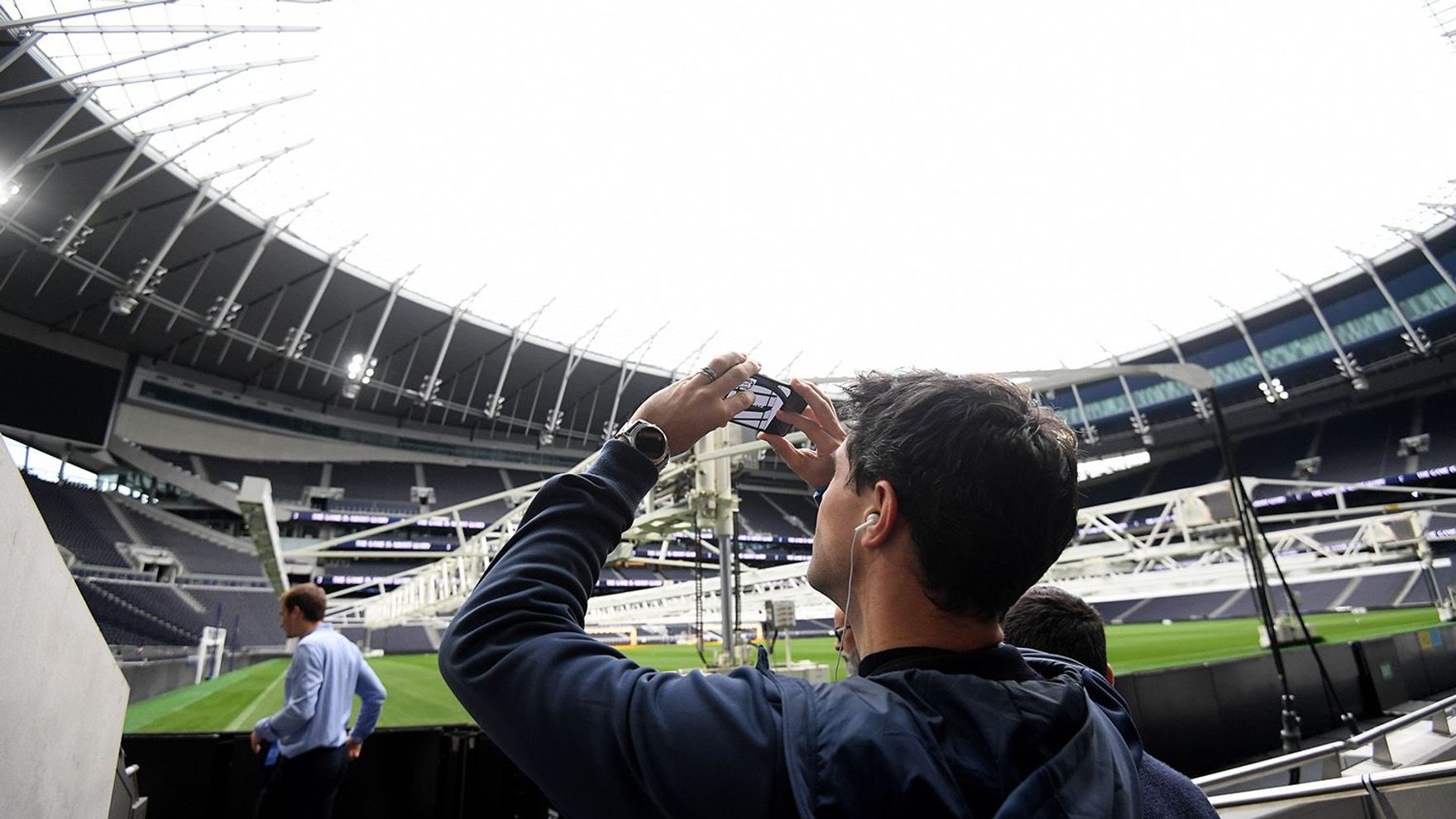
How the Pitch System Actually Moves
The retractable pitch is not one piece. It is three separate growing trays – each with its own drainage layer, its own undersoil heating circuit, and its own artificial lighting rig to maintain grass health while the tray is stored indoors. Think of each tray as a self-contained growing environment that happens to be mounted on wheels. The trays sit on a track system and slide horizontally out through an opening at the South Stand end of the bowl. That process – full extraction and NFL field preparation – takes less than 24 hours. It sounds fast. It is.
What the Technical Tour makes tangible is the precision required at the join. The three trays interlock at the centre line and at the division points. The connection has to be tight enough that players cannot detect a ridge underfoot at pace. The surface is a hybrid system – a synthetic mesh substructure with natural grass grown through it – which gives the tray enough structural integrity to withstand the mechanical stress of repeated movement without the playing surface degrading. Grass quality, frankly, is harder to maintain here than at a conventional pitch. The trays need active management at all times, even when the pitch is retracted. The stadium runs what amounts to two separate grass management programs simultaneously – one for the match-day surface, one for the stored position.
The Pitch System in Numbers
- Three independent growing trays – each with heating, drainage, and lighting
- The trays slide laterally through the South Stand end of the bowl
- Below the retracted position: a purpose-built NFL artificial turf field
- Full pitch-to-NFL-field conversion completes in under 24 hours
- Hybrid grass structure – synthetic mesh base with natural grass grown through it
Why This Is the Only Stadium in Europe That Can Do This
The critical point about Tottenham Hotspur Stadium is not that it hosts NFL games. Several European stadiums have hosted NFL London fixtures. The critical point is that this is the only venue in Europe designed from the foundation up to host American football – not to accommodate it temporarily, not to adapt for it once a year, but to treat it as a co-primary sport with the same infrastructure investment as Premier League football.
What does that actually mean in practice? Beneath the artificial turf field, you find NFL-specification drainage profiles. Field-level camera housings are positioned to meet the NFL’s own broadcast standards – not football broadcast standards – because the two codes require different sight line geometries. The dressing rooms accessible via the Technical Tour are sized and configured for American football rosters. Medical facilities are laid out according to NFL injury assessment protocols, not the Premier League’s. The end zone tunnel infrastructure is built for the player entry sequence used in NFL television packages. None of this arrived as a retrofit. It was engineered into the original construction.
This is not a football stadium that hosts NFL games. It is a dual-sport venue – and the difference between those two things is an enormous amount of buried engineering that you can only understand by going beneath the surface.
For 2026, the schedule includes Jacksonville Jaguars against Washington Commanders – continuing the partnership with the Jaguars as the stadium’s official NFL European home. Those fixtures are not borrowing a football venue. They are arriving at a building designed around their operational requirements from the first day anyone drew a floor plan.

The South Stand and 1,800 Screens
Two other engineering features come up repeatedly on the Technical Tour. First: the South Stand. At 17,500 seats, it is the largest single-tier stand in the United Kingdom. No horizontal division between upper and lower sections – just one continuous, steeply raked sweep of seats that produces a concentrated atmosphere unlike any other ground in English football. From a dual-sport engineering standpoint, the single-tier design is also deliberately practical. Sightlines to both end zones in American football are more consistent from a single-tier structure than from divided two-tier stands, where upper-deck seats can have partial obstructions to field corners.
Second: 1,800 screens. That density is not incidental. There is no position anywhere in the stadium – concourses, hospitality suites, service corridors – where you cannot see a live content feed. For NFL broadcasts, which have strict requirements around content delivery continuity for sponsorship and production coverage, this infrastructure is specifically relevant. The Technical Tour takes you into the backbone of the screen distribution network. It is not the most dramatic access point on the tour. But it is one of the moments where you realise how completely the building was designed around content delivery as a primary requirement rather than an afterthought.
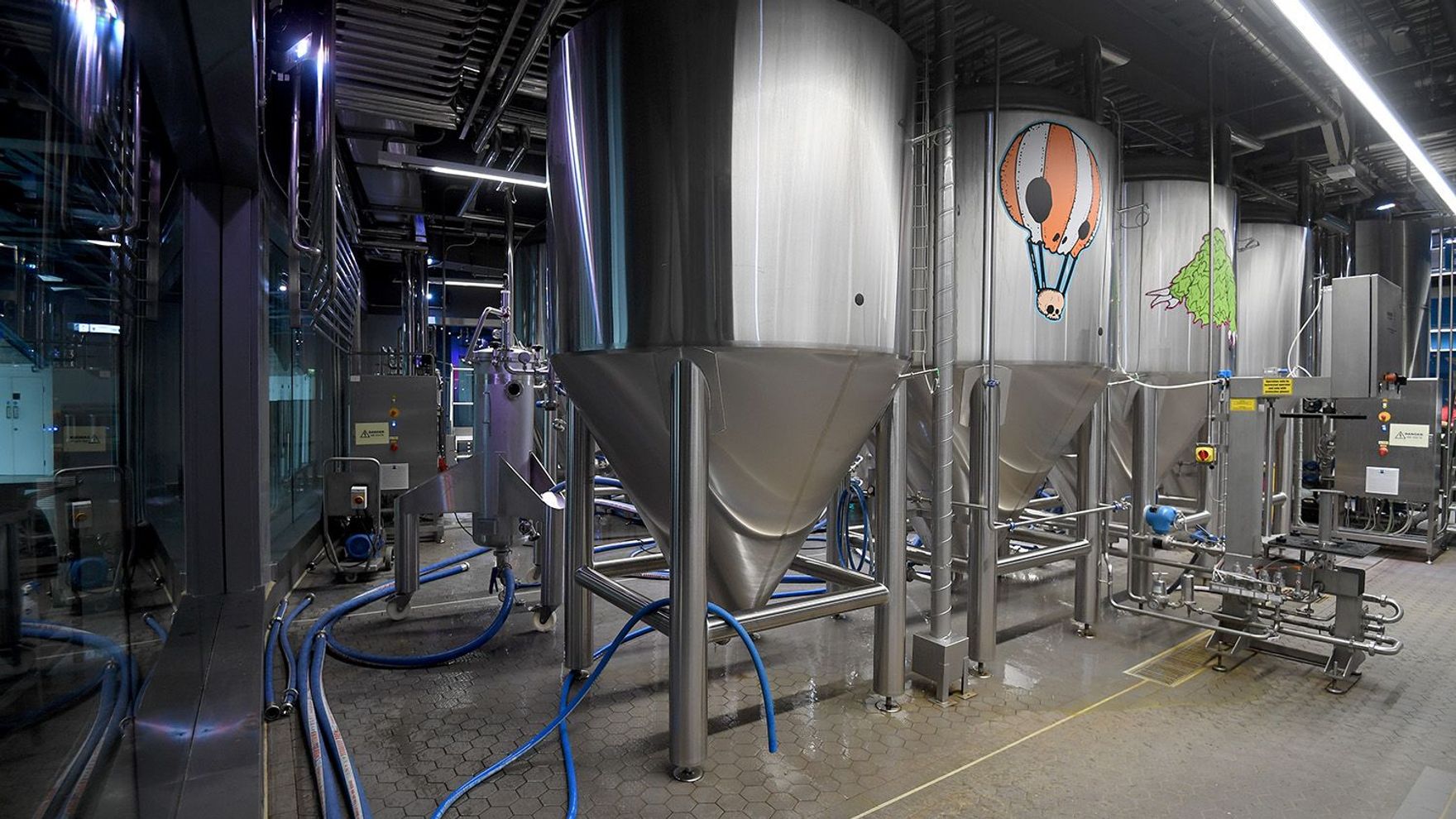
What Else the 3h45m Gets You
Beyond the pitch system and NFL infrastructure, the Technical Tour includes the Skywalk – 46.8 metres above the pitch, along a glass walkway with a full London panorama. That access is built into the Technical Tour ticket. The UEFA Europa League Trophy, which Tottenham won in 2025, is on display throughout the experience and available for photographs. Standard tunnel and dugout access is included. Broadcast infrastructure gets detailed attention. The tour is genuinely long – four hours, roughly – and it uses that time.
The harder thing to describe is what the tour does to your understanding of the building. Probably the most useful way to put it: after the Technical Tour, you cannot watch a Premier League game at this stadium – or an NFL fixture here – without understanding a considerable amount of what is happening beneath, behind, and around what you are watching. The 1,800 screens are not just there. The South Stand is not just big. The pitch is not just grass. Everything has a reason. And most of those reasons connect to the same original decision: to build the only stadium in Europe genuinely capable of hosting two elite sports without compromising either.
The One Practical Limitation Worth Knowing
Availability is the friction point. The Technical Tour does not run daily – it operates on selected dates, generally clustered around windows when more operational areas of the stadium are accessible. Dates sell out weeks in advance. Turning up on the day and hoping for a spot is not a reliable plan. If this is the specific reason you are visiting, book early. That is genuinely the only criticism worth making. The access level, the quality of guidance, and the physical spaces you reach all hold up. For anyone with real interest in how large-scale infrastructure is built and operates, this is one of the more substantial behind-the-scenes experiences available at any sporting venue in Europe. You can check tour dates and book at Tottenham Hotspur Stadium Tours.
